World Cup glory is the ultimate goal for any footballing nation. The thought of seeing your country’s heroes overcome the challenges of several other teams and lift the gorgeous golden trophy is enough to turn plenty of football fans to superstition. Some will have rigid rituals: the same place on the sofa, a lucky pair of socks, maybe even a walk around the same park before each game. One superstition that comes up time and time again, however, involves colour.
Colours are inseparable from mood, emotion, and instinct. We don’t think about it, but when we see a given colour we’re predisposed to react to it a certain way. One shade may evoke positive memories, while another can bring uncertainty and fear. Colours, of course, are also a fundamental part of football and the sport’s superstitions by association.
What if we told you that we could help bring some data and evidence to your footballing superstitions? At Gola, we’ve gone through the archives and combed through the record books to determine which colours are most likely to bring World Cup glory on the pitch.
Shop our World Cup colours collection
Jump to:
- The Methodology
- The Overall Record
- What Colours Equal Goals?
- Finals and Germany’s White Gold
- Penalty Peril and the Colours That Shape it
- Embrace Heritage Style with Gola
The Methodology
To uncover the true colours of victory, we took a deep dive into football’s history books, specifically looking at tournament data from 1966 onwards.
Why 1966? For a proudly British heritage brand like Gola, it’s an unforgettable year that saw England lift the trophy on home soil. It also serves as the perfect baseline, as it was the final tournament before the colour television revolution truly took hold. While the nation watched the legendary ’66 final in black and white, with colour TV not officially rolling out in the UK until the late ’60s, subsequent tournaments soon exploded into living rooms in full, glorious colour, turning these vibrant kits into global icons.
From that pivotal 1966 tournament onward, we catalogued the primary (home) and alternative (away/third) kit colours worn by competing nations. In instances where a kit featured multiple colours, halves, or stripes, we categorised it based on its majority hue to keep the data clean and consistent.
By tracking the outcome of every match, including wins, losses, draws, total goals scored, and the nail-biting results of penalty shootouts, we calculated the overall win rates, goal averages, and head-to-head records for each colour. This allowed us to look beyond the skills on the pitch and separate the statistical champions from the unlucky losers on the world’s biggest stage.
The Overall Record
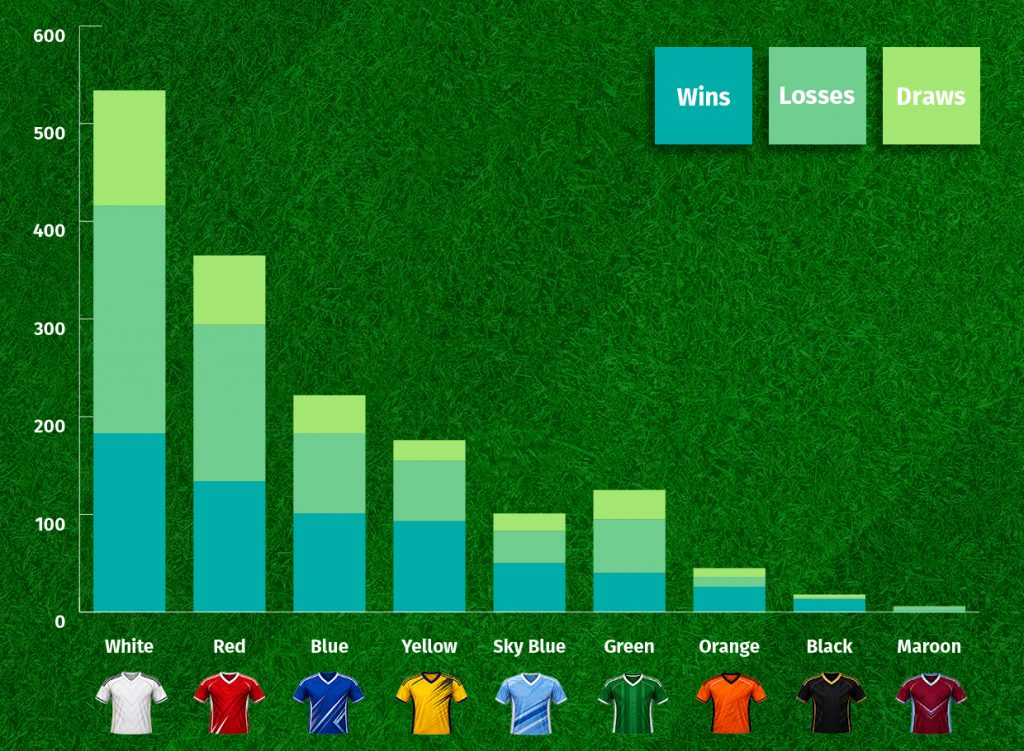
When it comes to sheer volume, white kits dominate the pitch. However, when we look at win-to-loss ratios, some distinct patterns emerge.
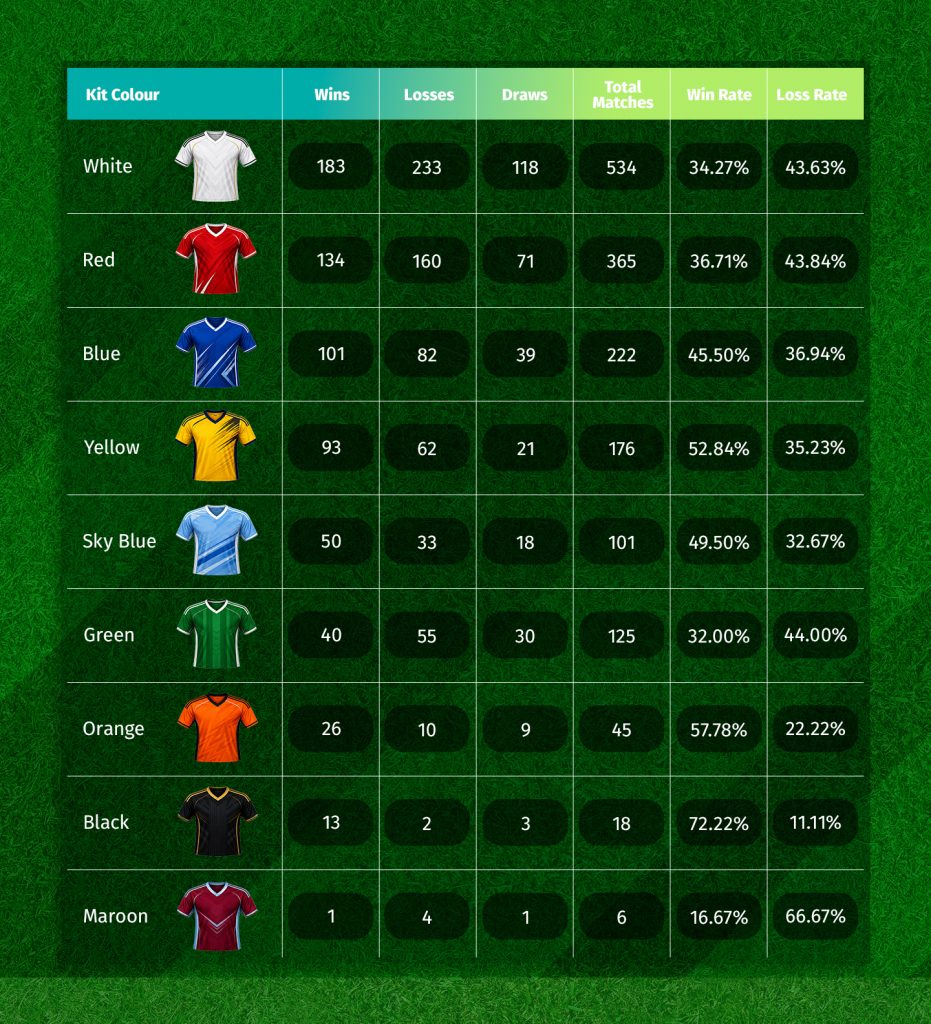
Key Takeaway: While white has the most wins overall, blue and yellow boast exceptionally strong win-to-loss ratios thanks to nations like Brazil, Italy, and France being consistently successful at World Cup finals. Meanwhile, black kits, though rarely worn, are incredibly effective, losing only 2 of their 18 matches.
Whether you’re shouting from the terraces or running drills, you can channel this winning energy by exploring the colourful retro-inspired options in our Gola Classics collection for men and women, featuring all your favourite heritage styles like the Harrier and the Elan.
What Colours Equal Goals?
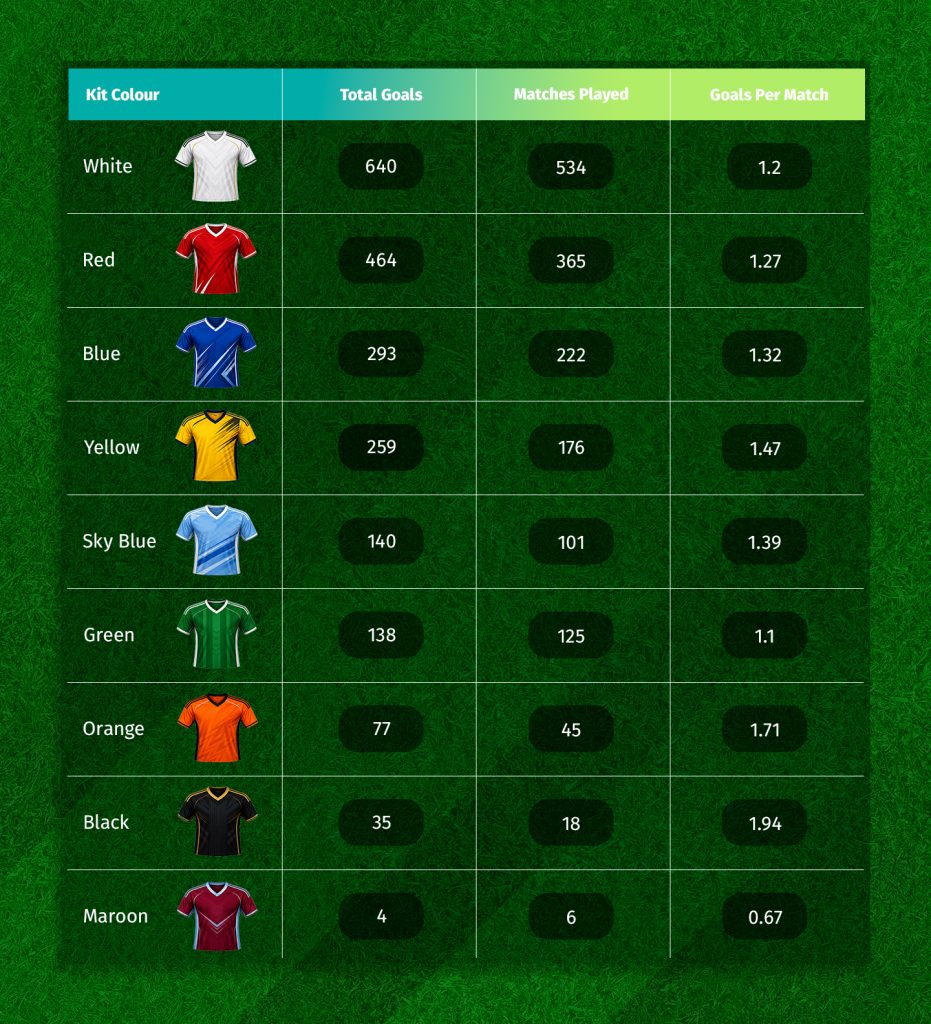
If you want to see the back of the net bulge, keep an eye out for teams wearing black or orange.
- Black Kits: Highly efficient. Averaging a massive 1.94 goals per game, it is the highest-scoring colour on average. Think of the rampant 2014 Germany side that beat hosts Brazil 7-1 in the semi-finals.
- Orange Kits: A true attacking threat. Famously associated with the Dutch, orange ranks second with 1.71 goals per match.
- Yellow & Sky Blue: Bringing South American flair, these colours offer excellent returns at 1.47 and 1.39 goals per match respectively.
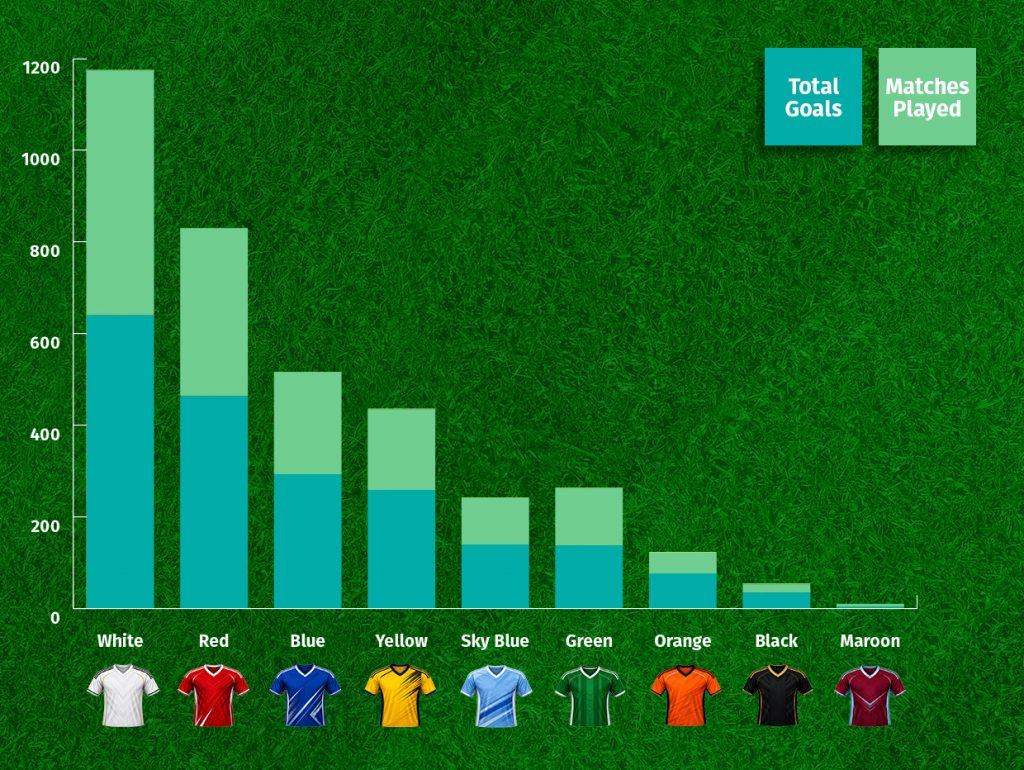
- White Kits: Despite scoring the most goals overall (640), the high volume of matches means white averages just 1.20 goals per match. Teams like England, Germany, and the USA have a chance to improve on this in coming tournaments.
Finals and Germany’s White Gold
Getting to the final is one thing, lifting the trophy is another. When the pressure is at its absolute highest, certain colours shine while others crack.
The Contrast of White
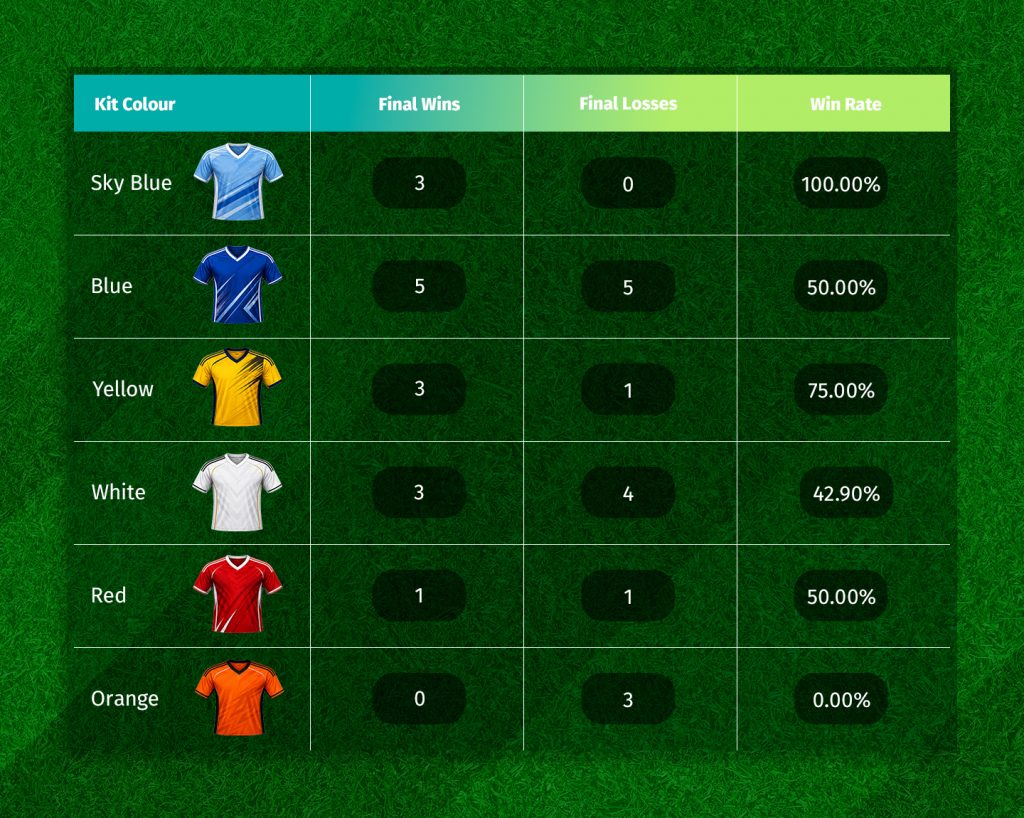
It’s one of the most fascinating quirks in our data: the white kit is simultaneously the most successful and the most heartbreaking colour in the tournament. Because it is the most common primary or alternative choice for many nations, white has secured the highest volume of overall wins (183) . But when the pressure peaks in the final, the magic seems to fade. Since 1966, white kits have lost more finals (4) than they have won (3), proving that while it might get you to the biggest game on earth, it doesn’t guarantee you’ll be the ones lifting the trophy. Germany were involved in all of these games apart from one, when France lost on penalties to Italy in 2006.
Penalty Peril and the Colours That Shape it
Penalty shootouts were introduced to the World Cup in the 1982 edition, with Germany and France contesting the tournament’s first-ever spot-kick decider in the semi-finals after a thrilling 3-3 draw. Interestingly, both goalkeepers were wearing red, but Germany began their reputation as penalty hotshots with a 5-4 win.
The ultimate test of ability under pressure has seen just as many countries thrive as fall, but what does the data tell us about colours? In short, you’d rather your goalkeeper was wearing green than those taking the penalties, as green-wearing goalkeepers have the second-highest rate of saves and the second-lowest conversion rate from the spot.
Red, on the other hand, is a very useful colour for either. The average of 3.33 goals per shootout is up there with the best, and 1.25 saves per shootout places them top of the goalkeeping charts.
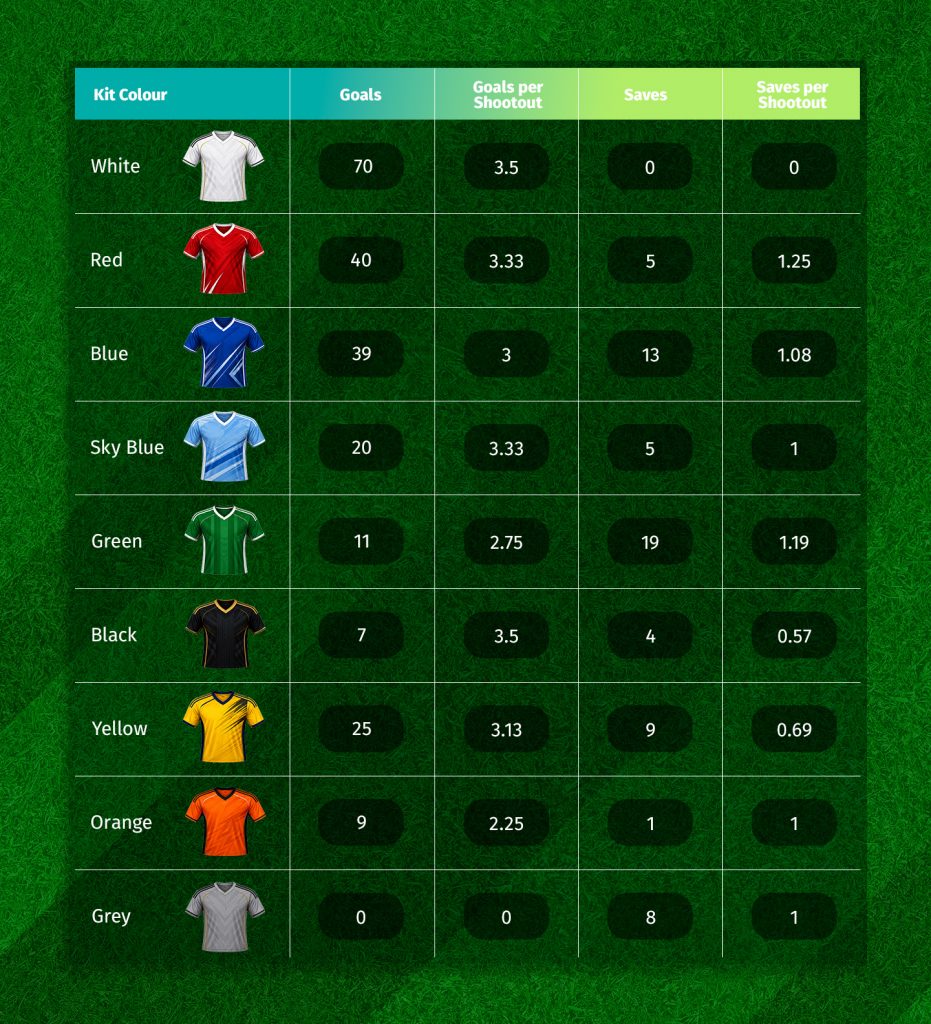
White, as we have discussed, is the most common colour worn at World Cups, so it’s no surprise to see it top the list with a staggering 70 shootout goals. The outlier that keeps white from being the outright dominant colour in the category is jolly old England.
Defeats in the famous England white against Germany in 1990, Argentina in 1998, and Portugal in 2006 weigh down the white average for successfully taken penalties. In fact, when England finally broke their World Cup penalty curse in 2018 against Colombia, they did so wearing red.
Embrace Heritage Style with Gola
Whether you align with the flawless victory of sky blue, the reliable history of Brazilian yellow, or the sheer volume of white, you can find the perfect colourway to match your aesthetic and superstitions at Gola.
Investing in a pair of Gola trainers is investing in a piece of British nostalgia. From the iconic courtside classic Gola Allcourt to our Recycled Materials collection, we offer a quality product that seamlessly fuses fashion, sport, and 120 years of undeniable history.
Shop the full Men’s Gola Trainers and Women’s Gola Trainers collections today and find your own winning colours.
Shop our World Cup colours collection