Monthly Archives:

June 2026

Football

Trainers to Match With Your Retro Football Tops

Is your wardrobe full of retro football shirts ready for the summer? Well, the right pair of trainers can take a throwback football fit from trendy to trailblazing in a flash. At Gola, we know a thing or two about football fashion. We’ve been at the forefront of British sporting culture for over a century, with our shoes worn on terraces throughout the country for decades.

To help you find the perfect finish for your retro football-inspired look this summer, we’ve put together a guide to put the ideal pair of trainers on your feet to match the top.

Jump to:

Crisp White Classics

As discussed in our deep dive into World Cup colours, white is the most commonly featured kit colour in the sport’s greatest tournament. That means there’s an abundance of classic white strips that you may have your eye on or already own. It might be a retro England top with the names Lineker, Gascoigne, or Beckham donning the back. Alternatively, it could be one of the slick shirts Germany has worn in many a successful final.

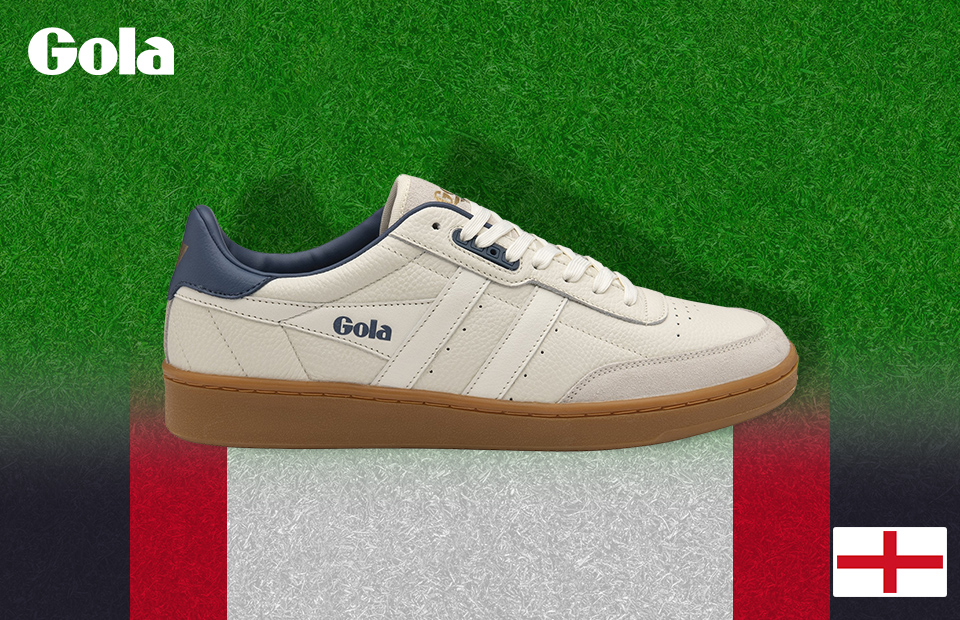
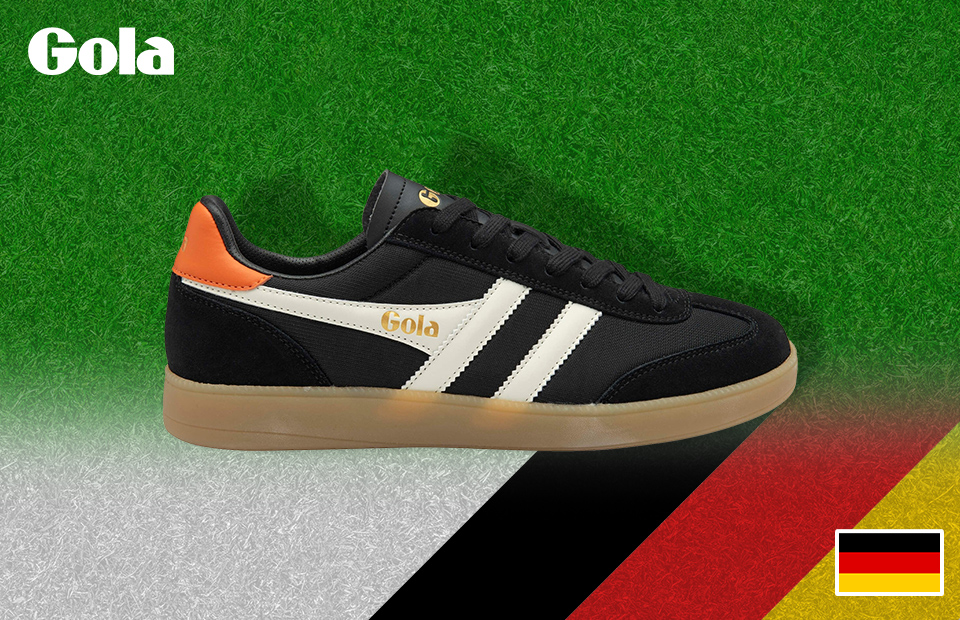
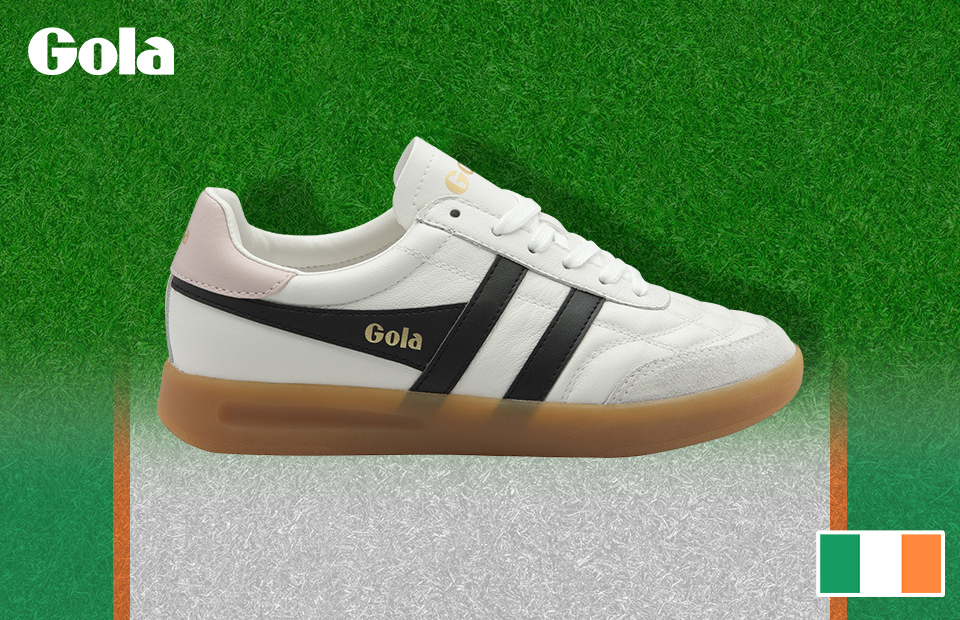
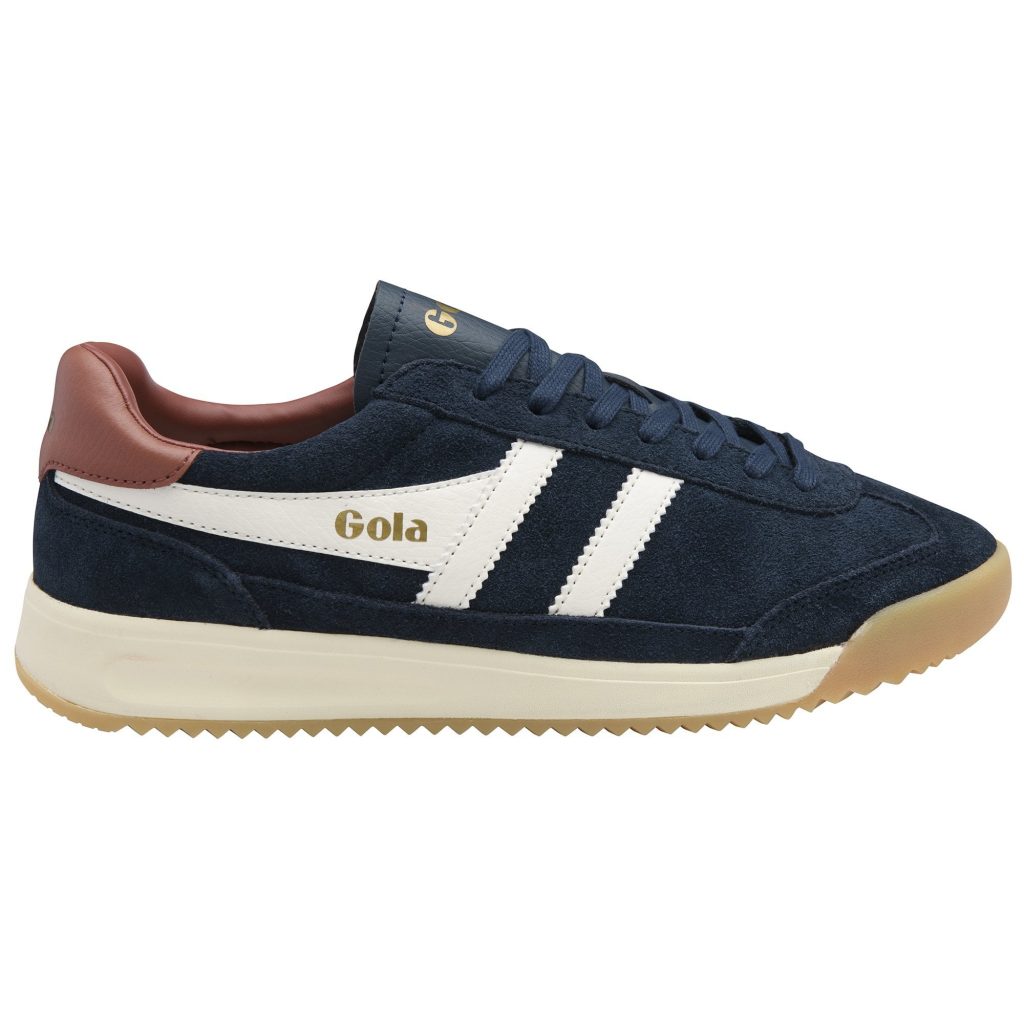
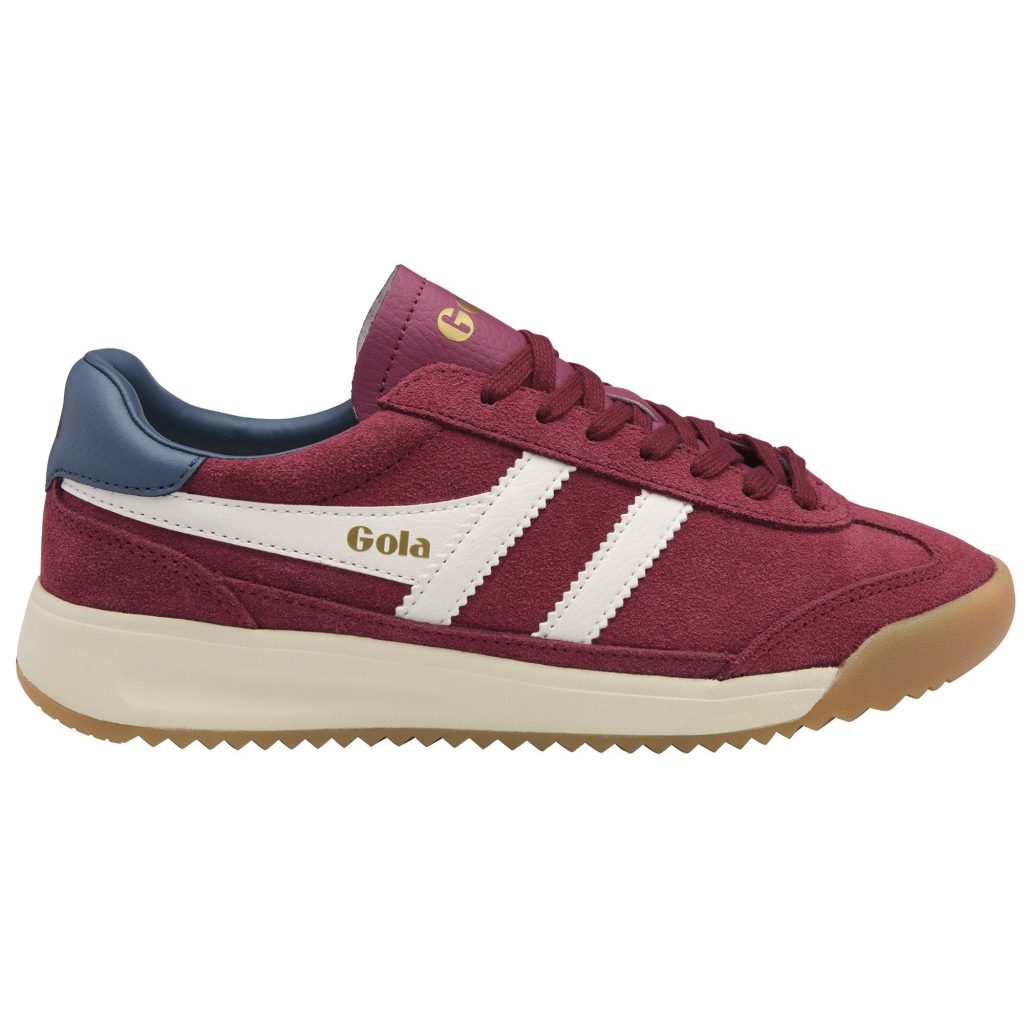
Whatever the specific jersey, the essence is often the same. Sharp, classic, and instantly recognisable. Bring the ‘90s aesthetic full circle with our specially selected Gola Contact Leather trainers in white and black or Stadia Trainers.

The timeless appeal and minimalist lines of the Contact Leather let the shirt’s striking chest pattern do all the talking, keeping the aesthetic sleek and grounded in vintage court style.

Retro Football ShirtPaired Trainers
England 1998 (Home)Contact Leather (Off White/Moonlight)
West Germany 1990 (Home)Contact Leather (White/Black)
Republic of Ireland 1990 (Away)Stadia Leather Trainers (White/Black/Chalk Pink)
Contact Leather (Off White/Moonlight)
Contact Leather (White/Black)
Stadia Leather Trainers (White/Black/Chalk Pink)

Bright and Bold Yellow

Planning to meet summer head on with the brightest shirt in your collection? We fully support it. Yellow is arguably the colour of the World Cup. It’s inseparable from the tournament’s most successful team, Brazil. There are countless iconic yellow shirts that have become staples of many die-hard football fans’ wardrobes, and luckily we have the trainers to match.

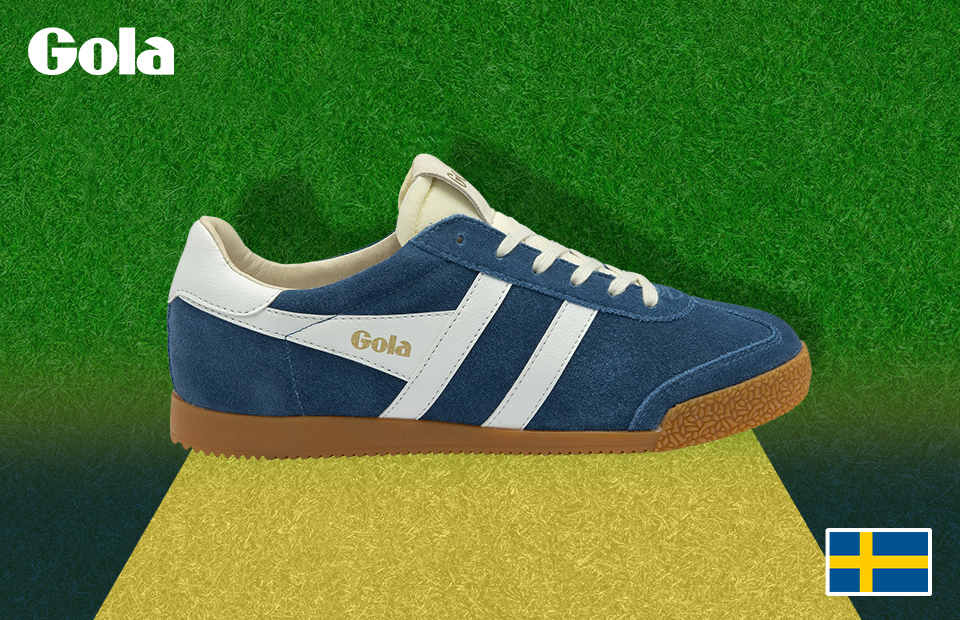
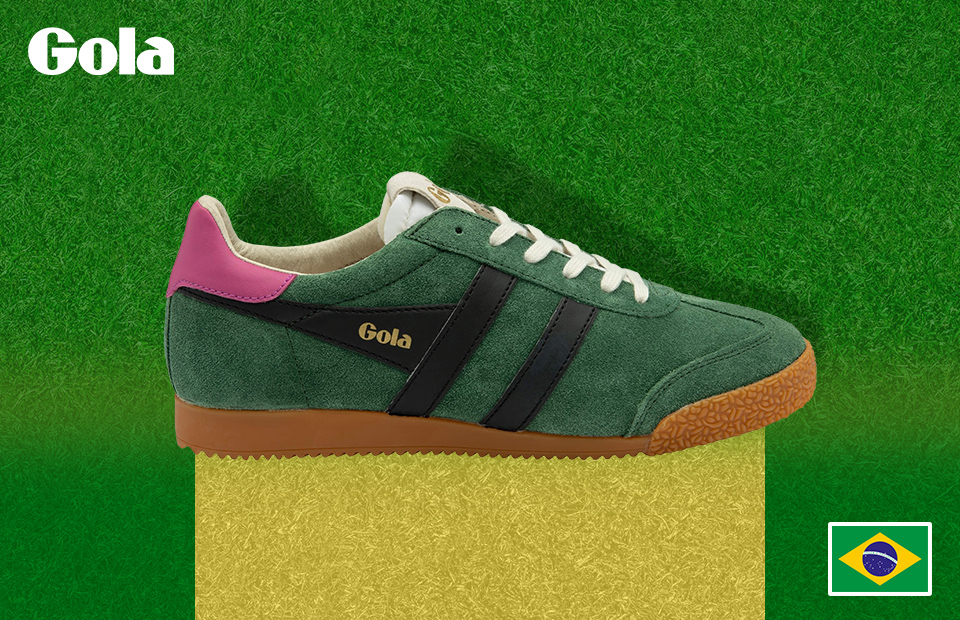
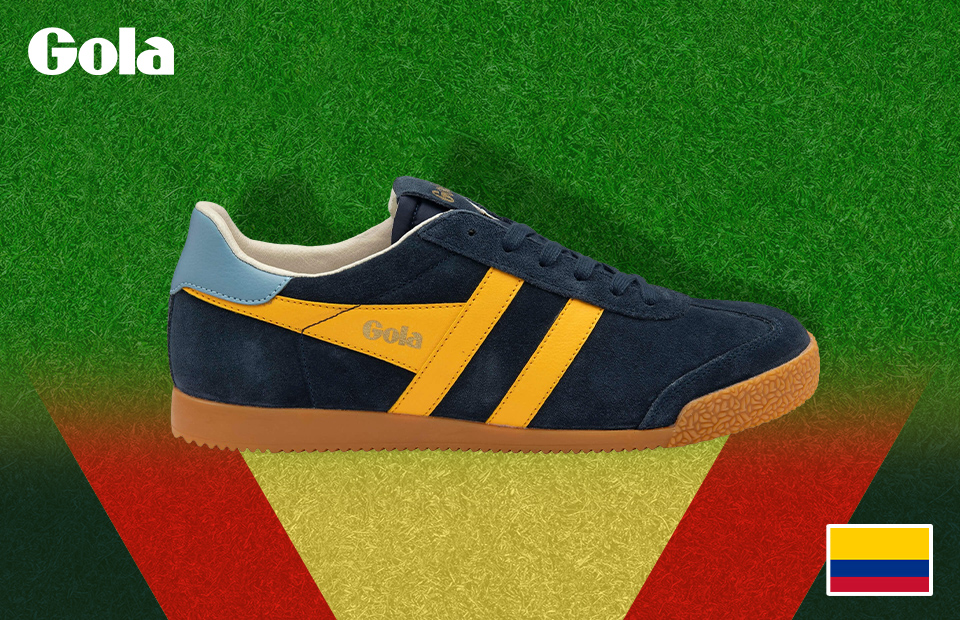
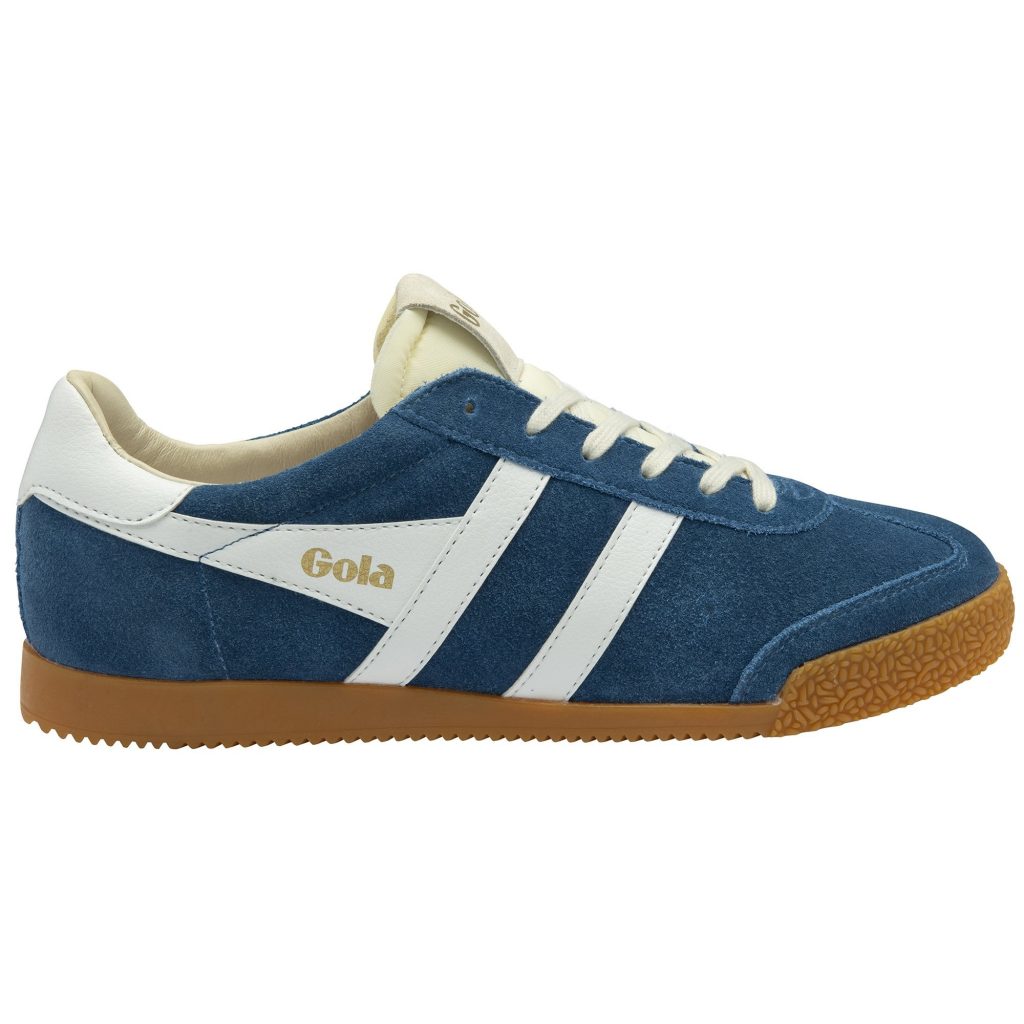
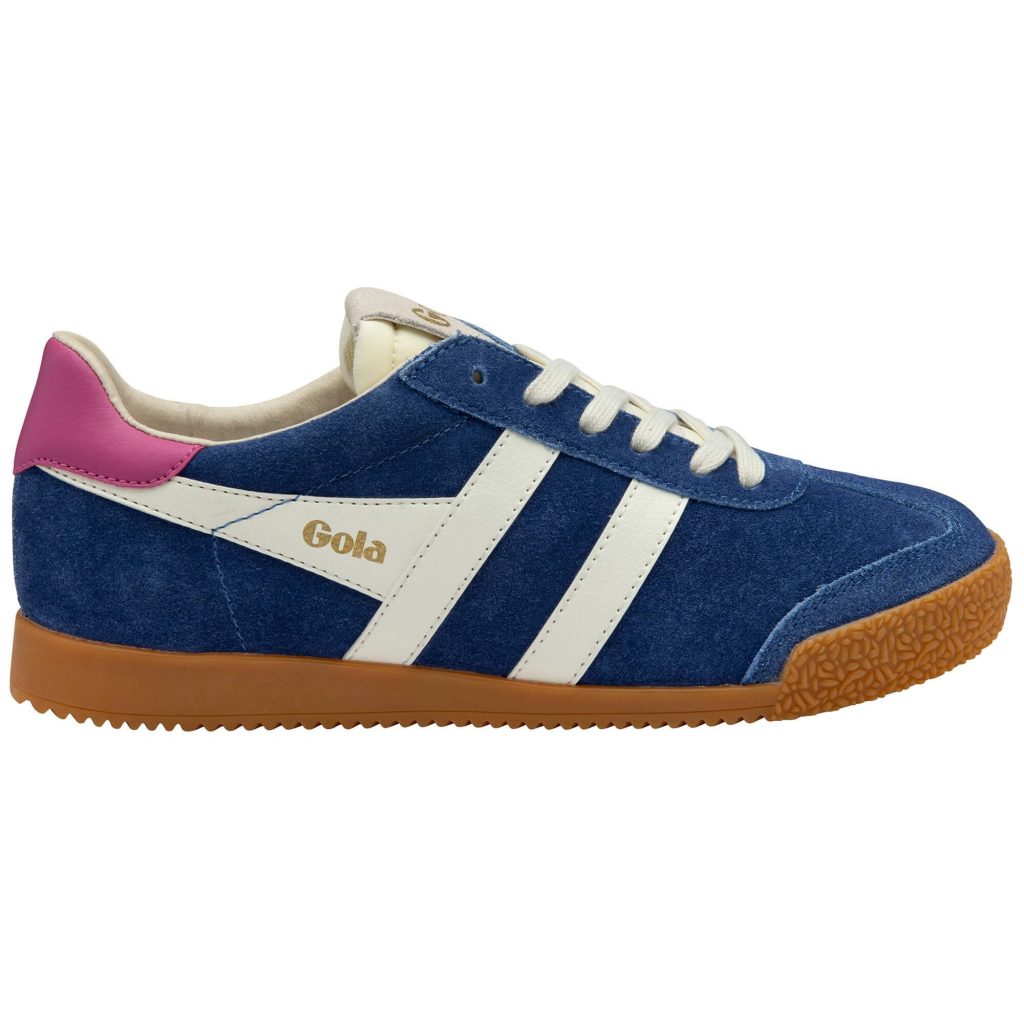
Our range of Gola Elan trainers is the perfect fit for your vibrant, glory-laden shirts that will grace the fan park this summer. First introduced in the 1970s, the Elan is a retro masterpiece. The old-school gum sole harks back to Gola’s sporting roots, while the stunning colourways perfectly match the iconic Brazilian trims. It’s an effortless blend of South American flair and British heritage.

Retro Football ShirtPaired Trainers
Sweden 1994 (Home)Classic Elan (Marine Blue/White)
Brazil 2002 (Home)Classic Elan (Evergreen/Black)
Colombia 2018 (Home)Classic Elan (Navy/Sun/Iceberg)
Classic Elan (Marine Blue/White)
Classic Elan (Evergreen/Black)
Classic Elan (Navy/Sun/Iceberg)

Allez les Bleus

Blue comes in many shades, so there are various ways to style it. Pale blue may bring back memories of the legendary England change shirt worn at Italia 90, with the subtle diamond pattern, made famous by New Order’s “World in Motion” music video and the peak of 90s football fever.

To paraphrase John Barnes’ iconic rap, “You’ve got to hold and give, but do it at the right time. You can be slow or fast, but Gola’s shoes are sublime.”

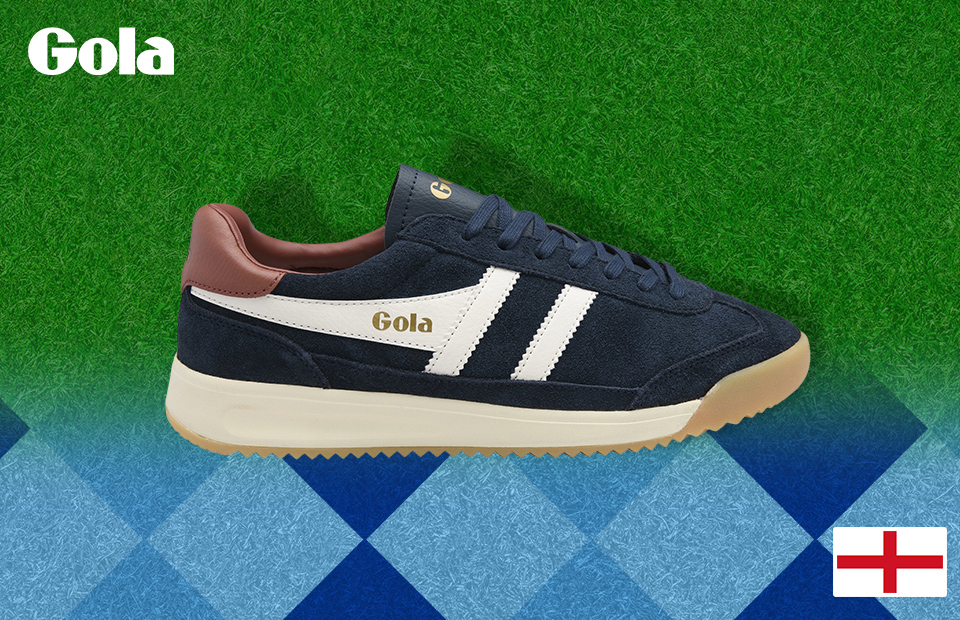
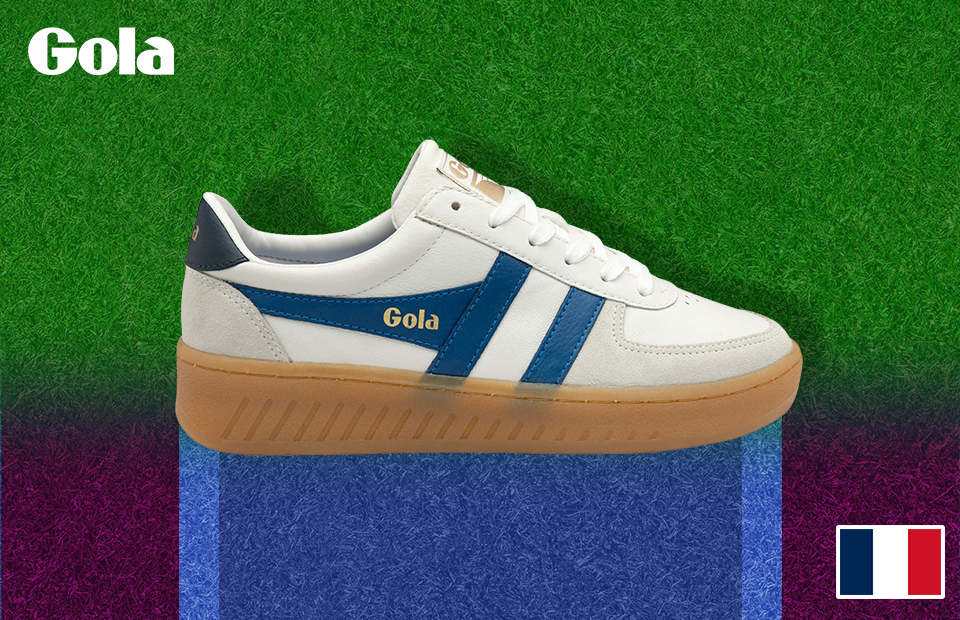
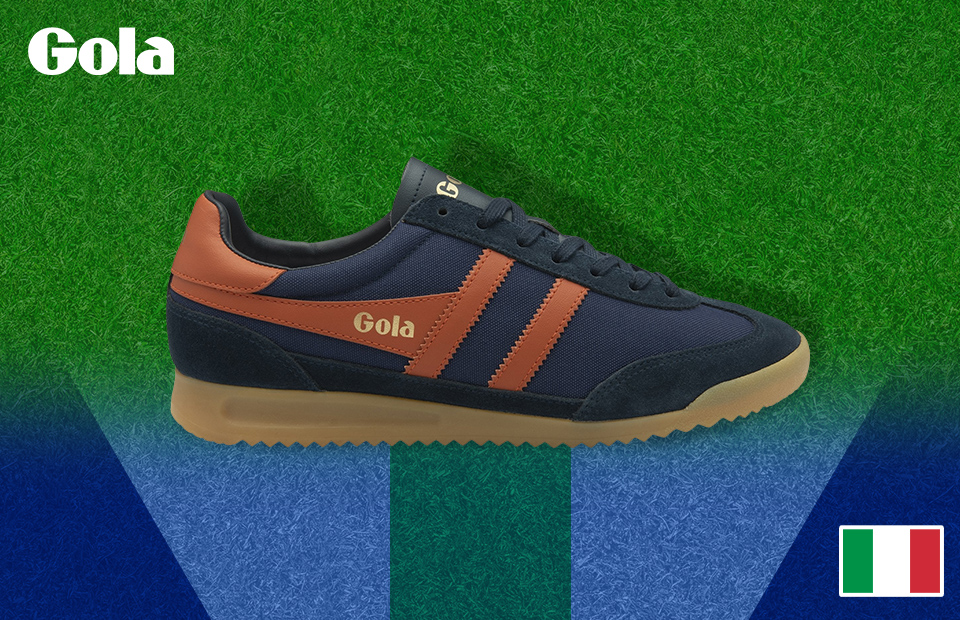
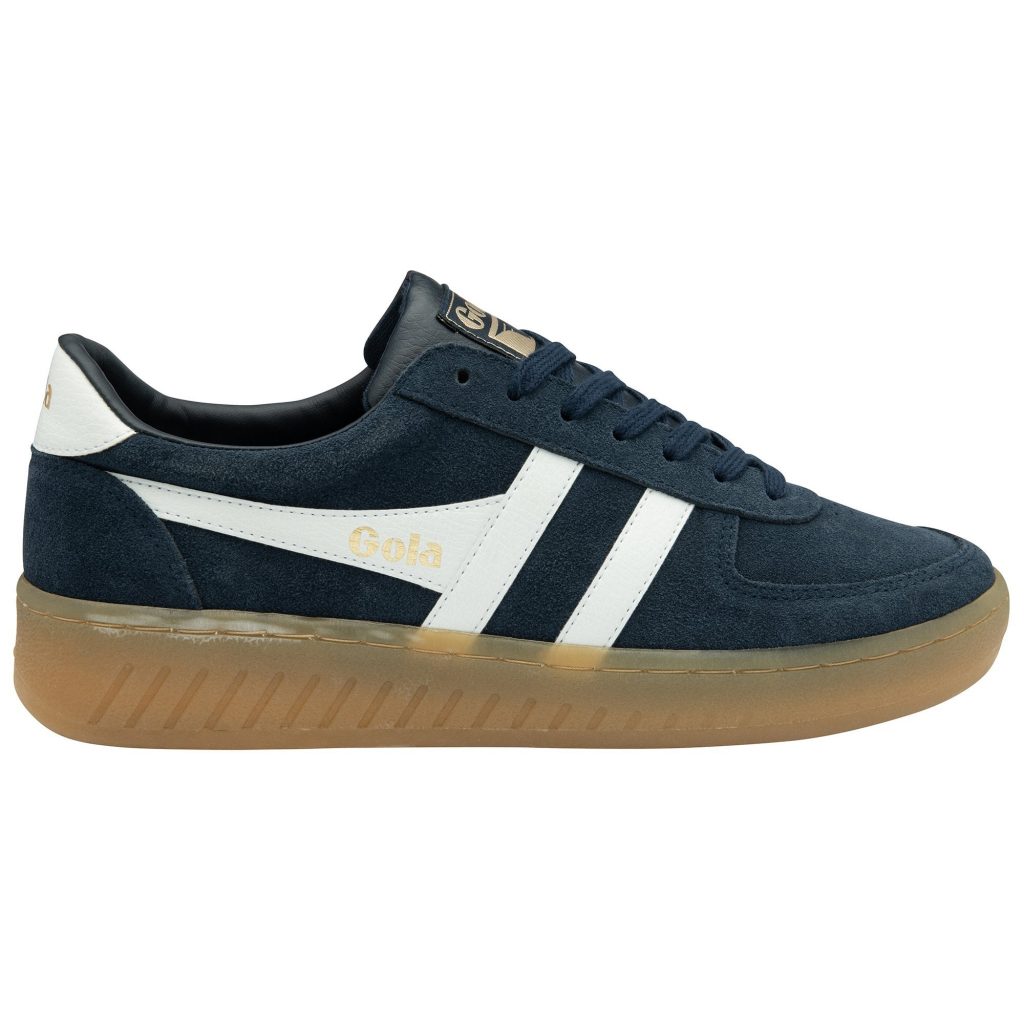
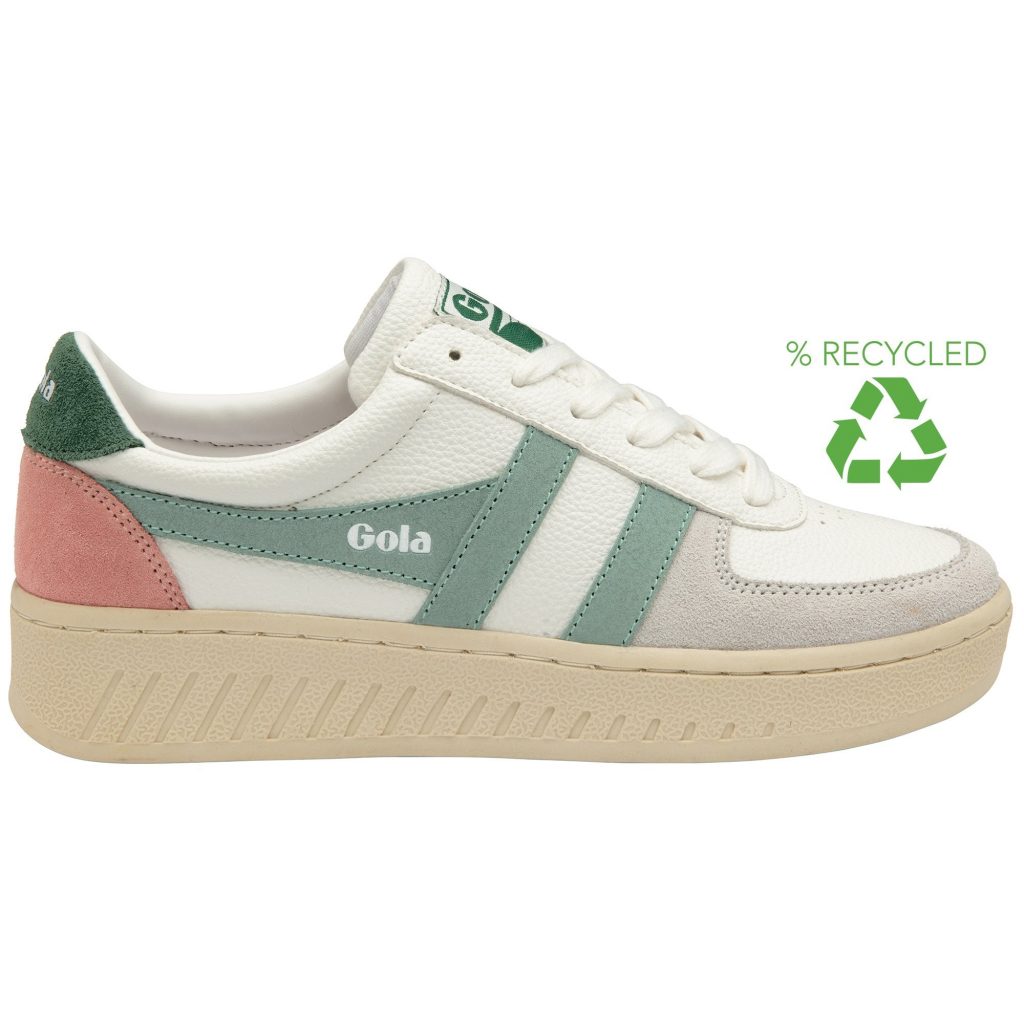
Indeed, they are, John. That’s why pairing your retro pale blue jersey with Gola Tornado trainers or Grandslams works so well. The track-and-field-inspired Tornado screams ‘80s and ‘90s UK street culture, and they also work brilliantly with deeper blues like those of France or Italy.

Retro Football ShirtPaired Trainers
England 1990 (Away)Tornado ‘88 (Navy/Off White)
France 1998 (Home)Grandslam Elite (White/Sapphire/Navy)
Italy 2006 (Home)Tornado (Navy/Moody Orange)
Tornado ‘88 (Navy/Off White)
Grandslam Elite (White/Sapphire/Navy)
Tornado (Navy/Moody Orange)

Make the Most of Stripe Season

An underrated element of a lot of retro football shirts is the use of stripes. It’s rare you see a striped top pulled off quite so well anywhere outside of a football context. At Gola, we want to help you make the most of your stripiest numbers. When associating stripes with World Cup glory, there’s one nation that stands above the rest. 

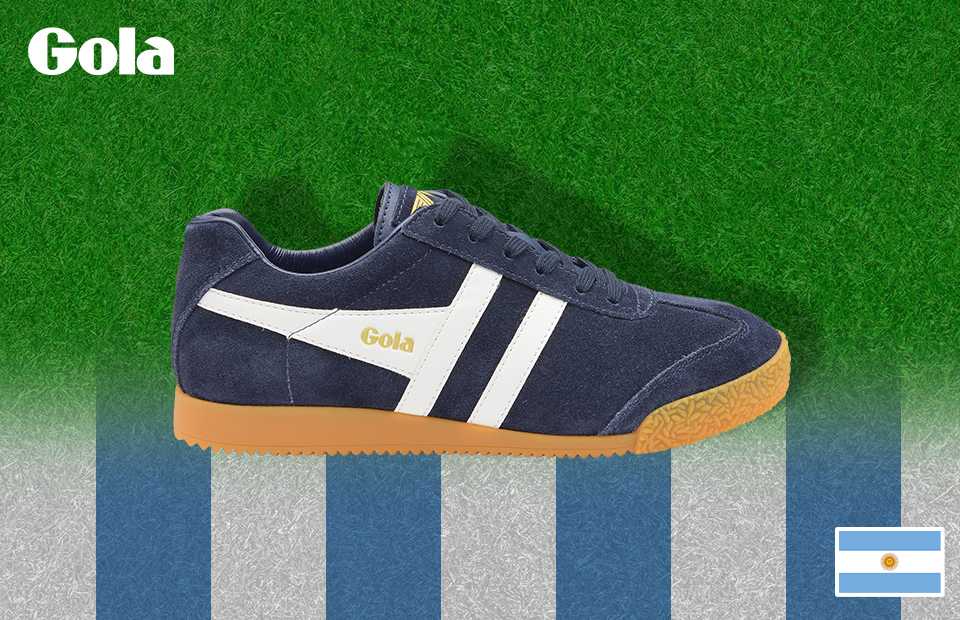
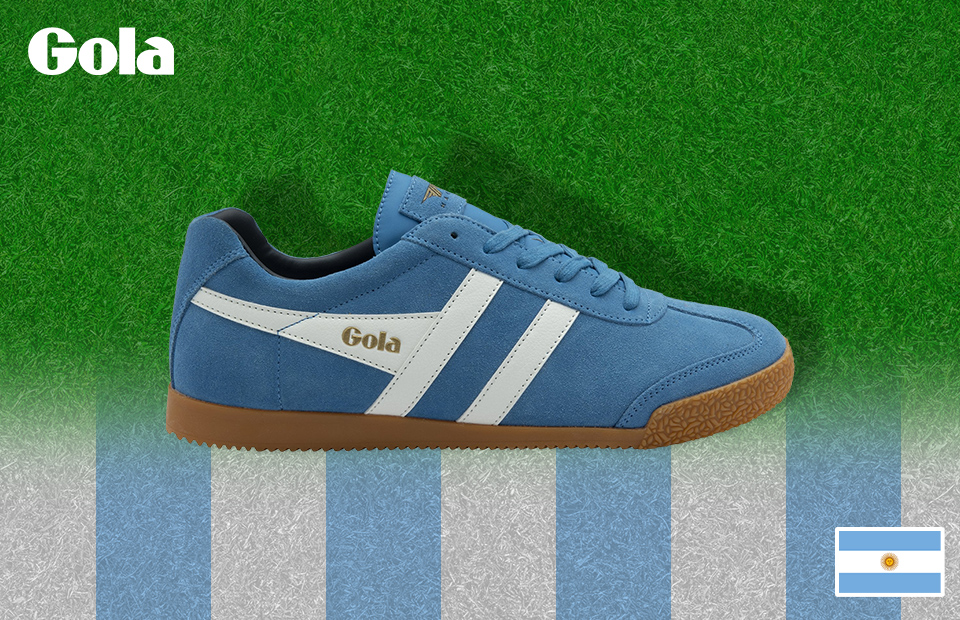
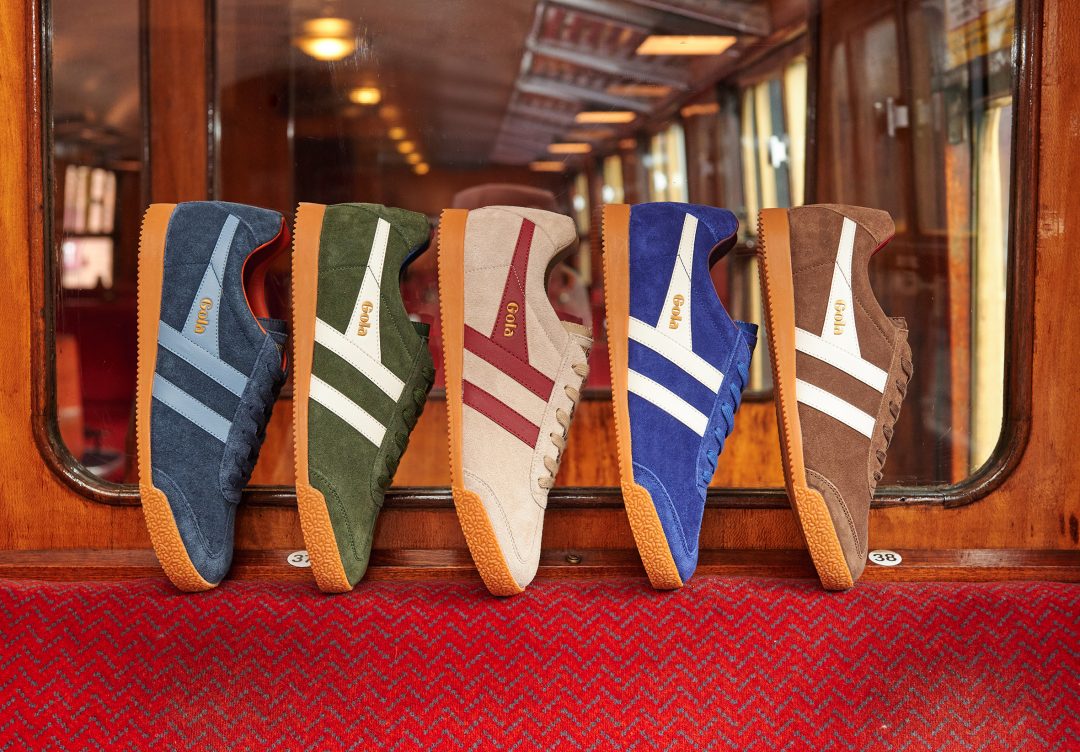
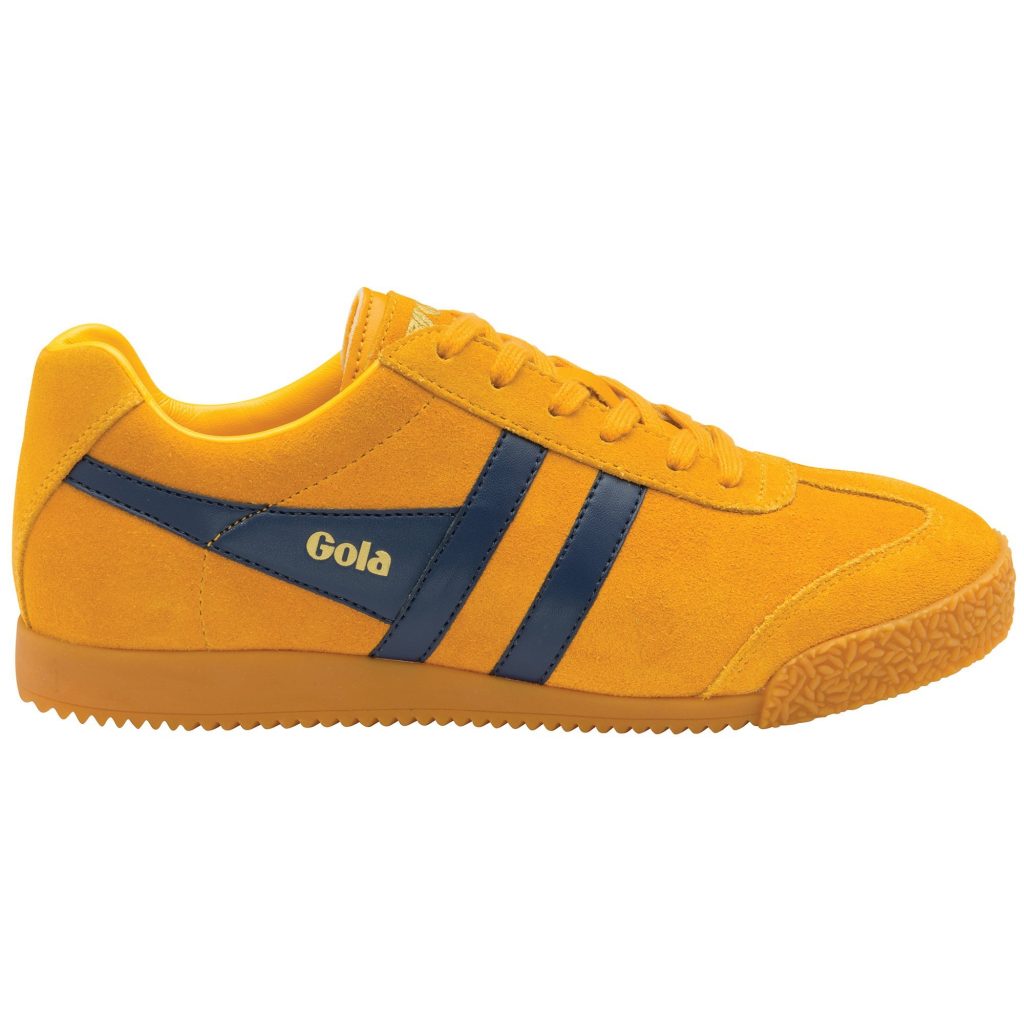
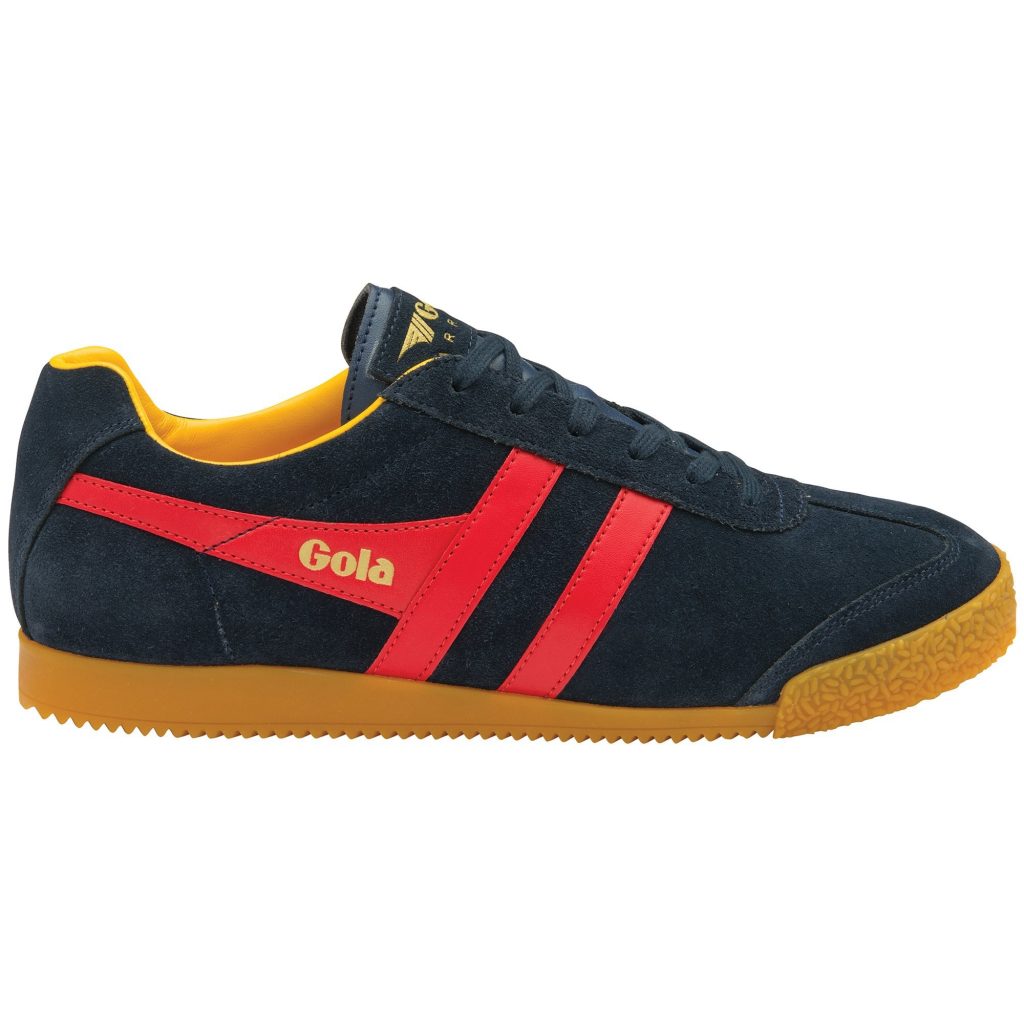
Argentina’s historical and recent success has seen an influx of sky blue and white shirts with Messi or Maradona on the back hit the streets. If you’ve got one of your own, you should find a pair of Gola Harriers to match it.

Created in 1968, the Harrier is Gola’s flagship style. The deep navy suede and crisp white wingflash offer a stunning contrast to the lighter sky blue top. It’s a nod to football purists and terrace enthusiasts alike.

Retro Football ShirtPaired Trainers
Argentina 1986 (Home)Harrier (Navy/Off White)
Argentina 2006 (Home)Harrier (Santorini/White)
Harrier (Navy/Off White)
Harrier (Santorini/White)

Other Iconic Tops

We’ve covered the staple colours and shirts most likely to grace gardens and screenings across the country this summer, but why stop there? We’ve selected a couple of favourite retro football shirts and picked out the trainers to match.

Netherlands 1988 (Home)

This iconic orange number, adorned with the unique design of a real picture of players celebrating on the front, is the quintessential Netherlands top. It’s always a stunning sight whenever Dutch fans converge on a stadium en masse, all wearing their nation’s colours, and you can match their style by pairing this top with some slick footwear.

  • The Trainer Match: Gola Viper (Orange/Navy) and Gola Viper (White/Cameo/Dark Brown/Gum)
  • Why it works: An outrageously bold shirt needs a beautifully proportioned trainer to balance the outfit. Rooted in 1970s sports shoe design, the Viper’s minimalist lines and on-trend gum sole ground the bright orange shirt perfectly, giving you a coordinated, vintage-inspired look without clashing.

Mexico 1998 (Home)

A true cult classic. This bright green shirt features a massive, tonal print of the Aztec sun stone across the entire torso.

  • The Trainer Match: Gola Europa (Off-White/Green) and Cyclone Leather Trainers (White/Green)
  • Why it works: Because the shirt is so busy, you need a shoe that acts as a clean canvas. Straight out of Gola’s archives, the Europa and Cyclone trainers are the ideal lightweight spring/summer choice. The stylish design keeps the look relaxed, allowing the complex energy of the top to take centre stage.

Shop Stylish Retro Gola Trainers

You should now be ready to take on a summer of sport in style. Your retro football shirt can finally find its long-lost perfect match with a pair of Gola trainers that takes your look from street to chic.

For more footwear that could suit other sporting wear and bring British heritage to every outing, browse our full collection of Gola men’s trainers and Gola women’s trainers.

Shop our World Cup colours collection

Related posts

Art

What are the Most Successful Colours in World Cup history?
World Cup glory is the ultimate goal for any footballing nation. The thought of seeing your country’s heroes overcome the challenges of several other teams and lift the gorgeous golden trophy is enough to turn plenty of football fans to superstition. Some will have rigid rituals: the same place on the sofa, a lucky pair of socks, maybe even a walk around the same park before each game. One superstition that comes up time and time again, however, involves colour.

Colours are inseparable from mood, emotion, and instinct. We don’t think about it, but when we see a given colour we’re predisposed to react to it a certain way. One shade may evoke positive memories, while another can bring uncertainty and fear. Colours, of course, are also a fundamental part of football and the sport’s superstitions by association.

What if we told you that we could help bring some data and evidence to your footballing superstitions? At Gola, we’ve gone through the archives and combed through the record books to determine which colours are most likely to bring World Cup glory on the pitch.

Shop our World Cup colours collection

Jump to:

The Methodology

To uncover the true colours of victory, we took a deep dive into football’s history books, specifically looking at tournament data from 1966 onwards.

Why 1966? For a proudly British heritage brand like Gola, it’s an unforgettable year that saw England lift the trophy on home soil. It also serves as the perfect baseline, as it was the final tournament before the colour television revolution truly took hold. While the nation watched the legendary ’66 final in black and white, with colour TV not officially rolling out in the UK until the late ’60s, subsequent tournaments soon exploded into living rooms in full, glorious colour, turning these vibrant kits into global icons.

From that pivotal 1966 tournament onward, we catalogued the primary (home) and alternative (away/third) kit colours worn by competing nations. In instances where a kit featured multiple colours, halves, or stripes, we categorised it based on its majority hue to keep the data clean and consistent.

By tracking the outcome of every match, including wins, losses, draws, total goals scored, and the nail-biting results of penalty shootouts, we calculated the overall win rates, goal averages, and head-to-head records for each colour. This allowed us to look beyond the skills on the pitch and separate the statistical champions from the unlucky losers on the world’s biggest stage.

The Overall Record

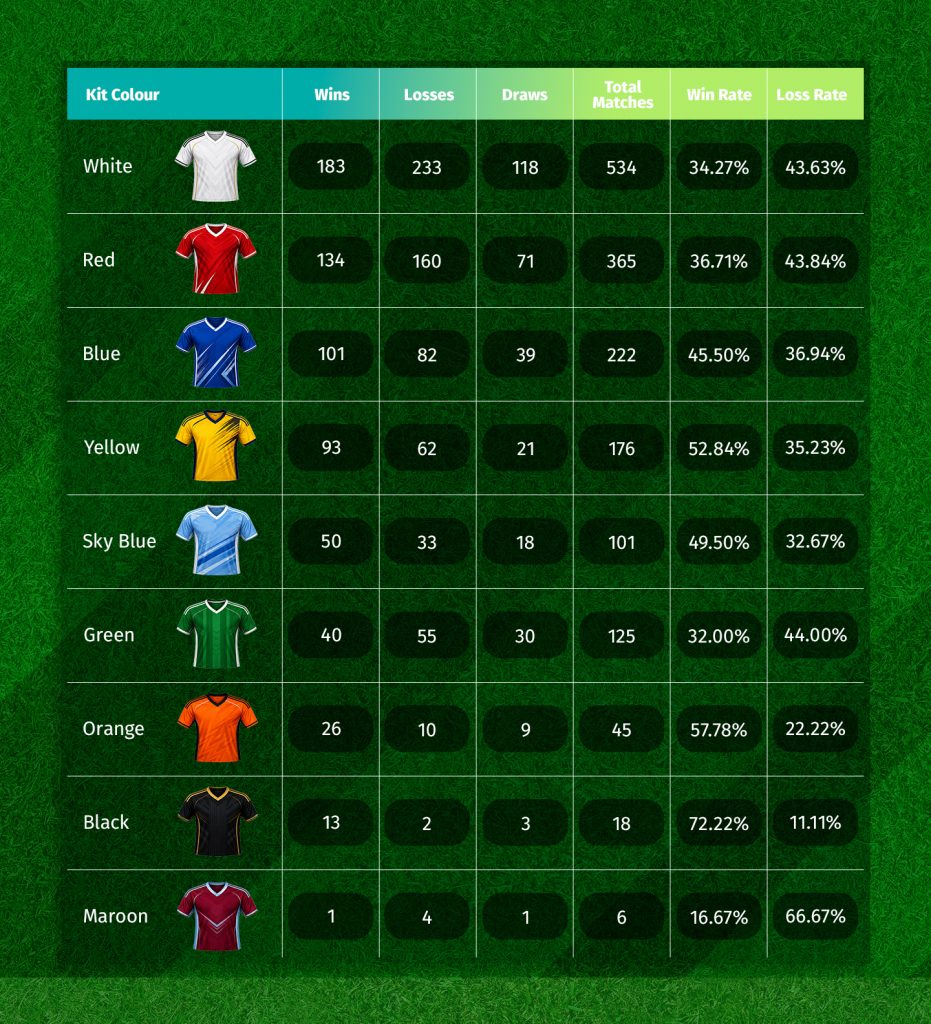
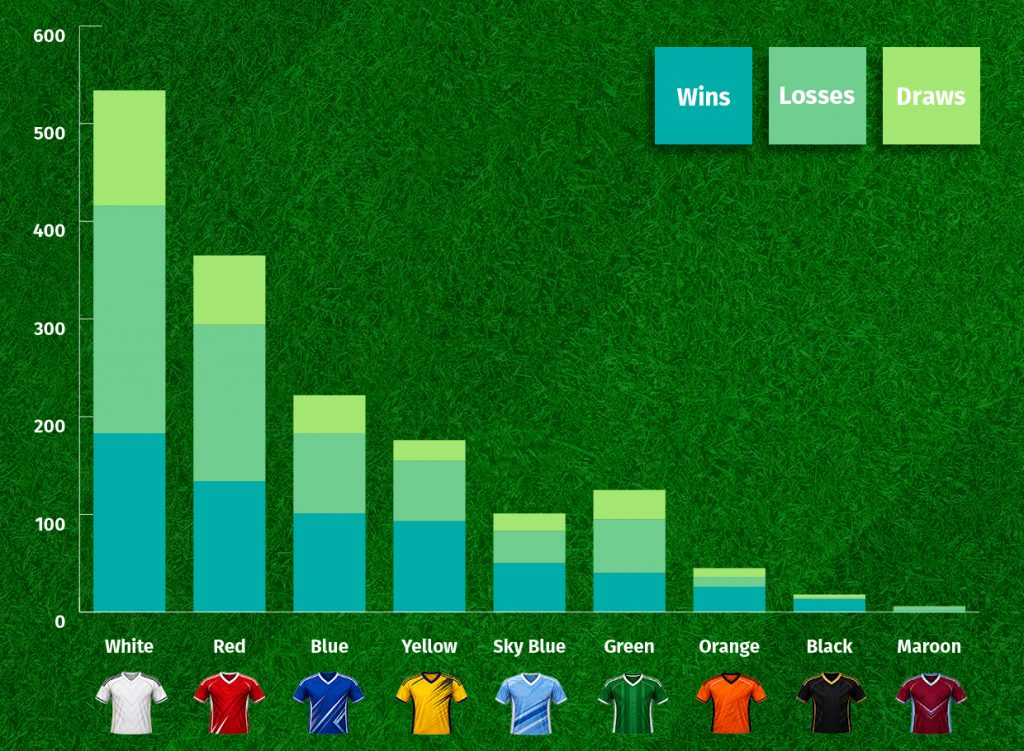
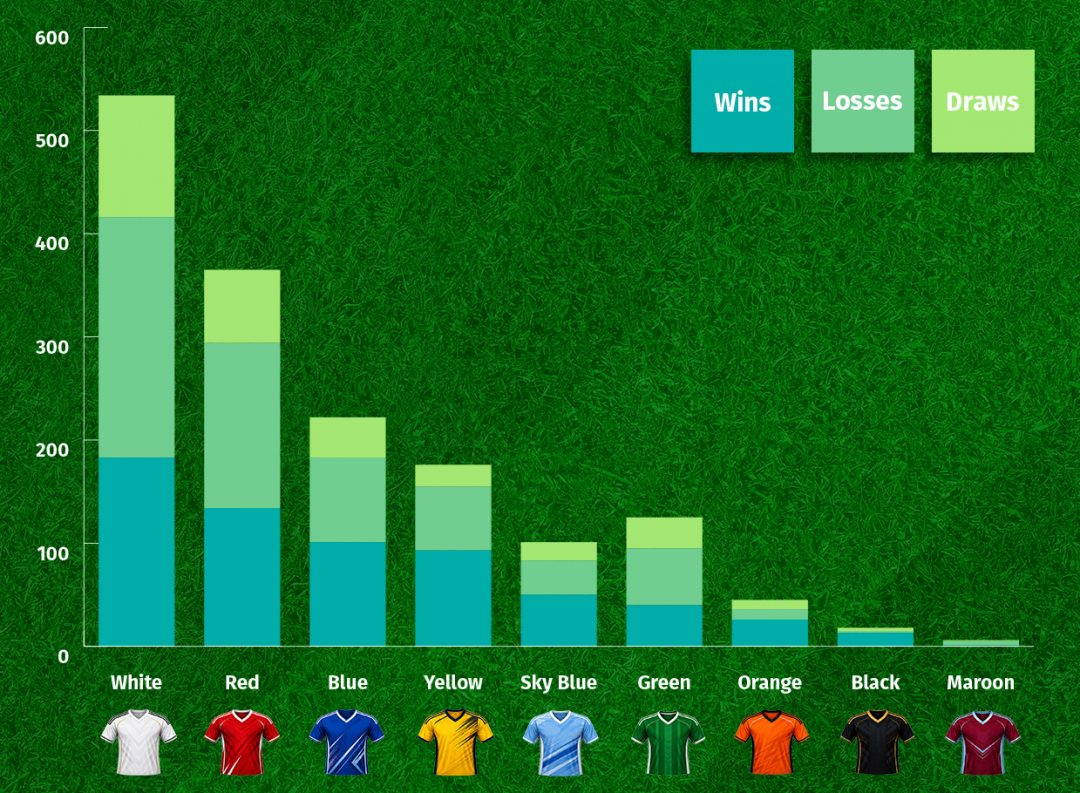
When it comes to sheer volume, white kits dominate the pitch. However, when we look at win-to-loss ratios, some distinct patterns emerge.

Total data record of world cup wins, losses and draws by colour since 1966

Key Takeaway: While white has the most wins overall, blue and yellow boast exceptionally strong win-to-loss ratios thanks to nations like Brazil, Italy, and France being consistently successful at World Cup finals. Meanwhile, black kits, though rarely worn, are incredibly effective, losing only 2 of their 18 matches.

Whether you’re shouting from the terraces or running drills, you can channel this winning energy by exploring the colourful retro-inspired options in our Gola Classics collection for men and women, featuring all your favourite heritage styles like the Harrier and the Elan.

Wins, draws and losses by colour World Cup Bar chart

What Colours Equal Goals?

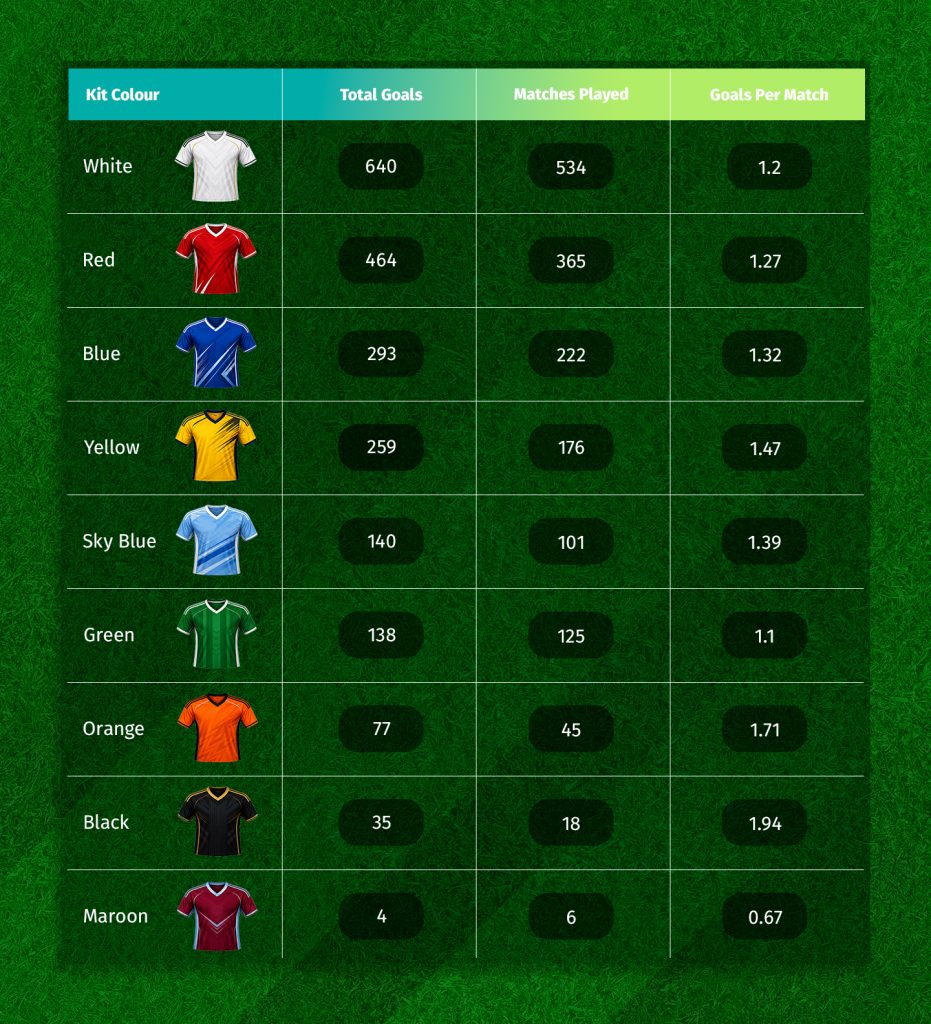
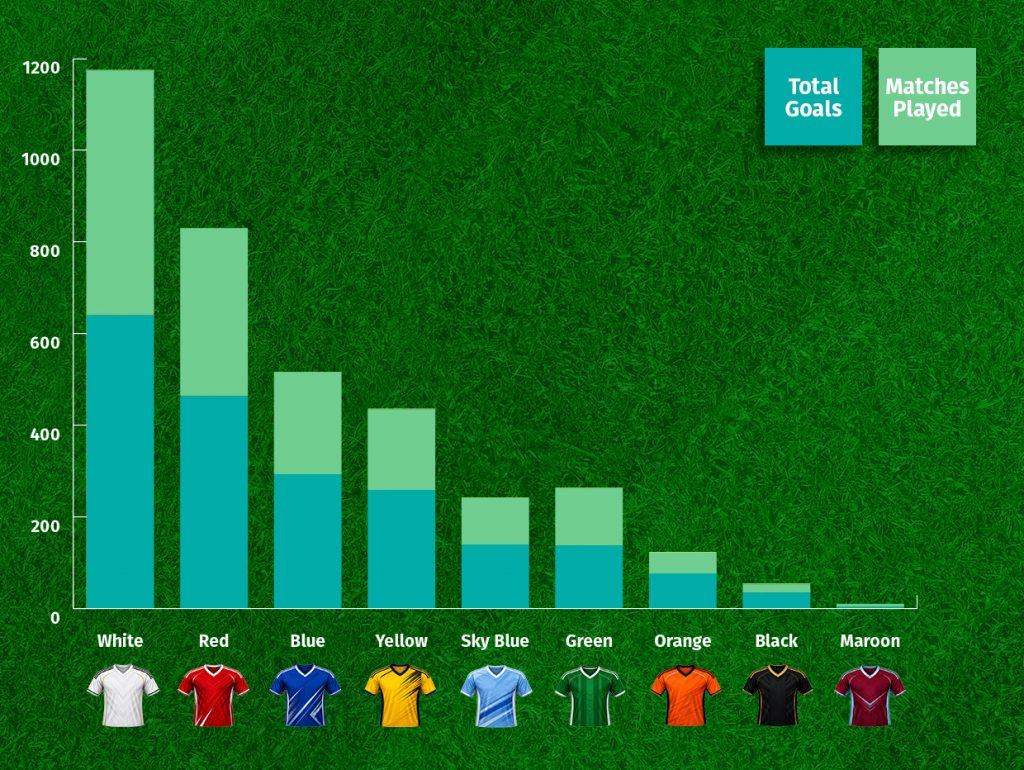
If you want to see the back of the net bulge, keep an eye out for teams wearing black or orange.

  • Black Kits: Highly efficient. Averaging a massive 1.94 goals per game, it is the highest-scoring colour on average. Think of the rampant 2014 Germany side that beat hosts Brazil 7-1 in the semi-finals.
  • Orange Kits: A true attacking threat. Famously associated with the Dutch, orange ranks second with 1.71 goals per match.
  • Yellow & Sky Blue: Bringing South American flair, these colours offer excellent returns at 1.47 and 1.39 goals per match respectively.
  • White Kits: Despite scoring the most goals overall (640), the high volume of matches means white averages just 1.20 goals per match. Teams like England, Germany, and the USA have a chance to improve on this in coming tournaments.
World Cup Goals by colour data table
World Cup Goals by colour Bar chart

Finals and Germany’s White Gold

Getting to the final is one thing, lifting the trophy is another. When the pressure is at its absolute highest, certain colours shine while others crack.

The Contrast of White

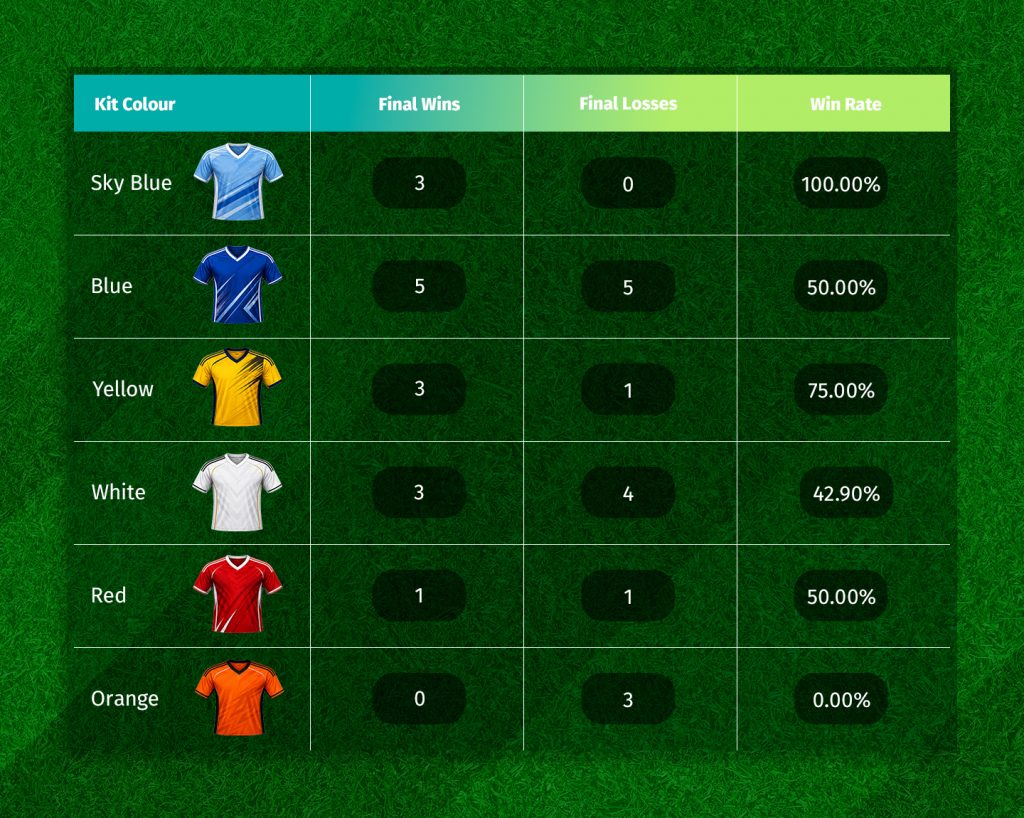
It’s one of the most fascinating quirks in our data: the white kit is simultaneously the most successful and the most heartbreaking colour in the tournament. Because it is the most common primary or alternative choice for many nations, white has secured the highest volume of overall wins (183) . But when the pressure peaks in the final, the magic seems to fade. Since 1966, white kits have lost more finals (4) than they have won (3), proving that while it might get you to the biggest game on earth, it doesn’t guarantee you’ll be the ones lifting the trophy. Germany were involved in all of these games apart from one, when France lost on penalties to Italy in 2006.

Wins in the World Cup finals data table

Penalty Peril and the Colours That Shape it

Penalty shootouts were introduced to the World Cup in the 1982 edition, with Germany and France contesting the tournament’s first-ever spot-kick decider in the semi-finals after a thrilling 3-3 draw. Interestingly, both goalkeepers were wearing red, but Germany began their reputation as penalty hotshots with a 5-4 win.

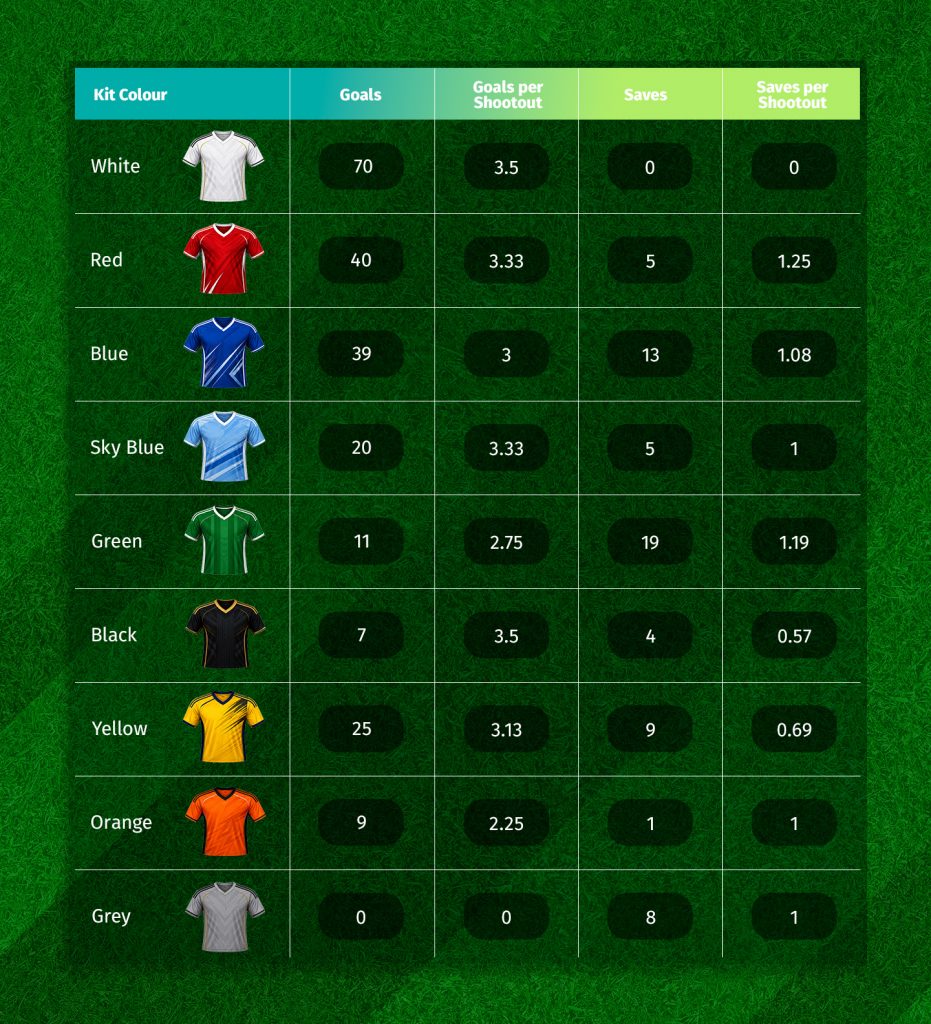
The ultimate test of ability under pressure has seen just as many countries thrive as fall, but what does the data tell us about colours? In short, you’d rather your goalkeeper was wearing green than those taking the penalties, as green-wearing goalkeepers have the second-highest rate of saves and the second-lowest conversion rate from the spot.

Red, on the other hand, is a very useful colour for either. The average of 3.33 goals per shootout is up there with the best, and 1.25 saves per shootout places them top of the goalkeeping charts.

World Cup Penalty Shootout Goals and Saves Data

White, as we have discussed, is the most common colour worn at World Cups, so it’s no surprise to see it top the list with a staggering 70 shootout goals. The outlier that keeps white from being the outright dominant colour in the category is jolly old England.

Defeats in the famous England white against Germany in 1990, Argentina in 1998, and Portugal in 2006 weigh down the white average for successfully taken penalties. In fact, when England finally broke their World Cup penalty curse in 2018 against Colombia, they did so wearing red.

Embrace Heritage Style with Gola

Whether you align with the flawless victory of sky blue, the reliable history of Brazilian yellow, or the sheer volume of white, you can find the perfect colourway to match your aesthetic and superstitions at Gola.

Investing in a pair of Gola trainers is investing in a piece of British nostalgia. From the iconic courtside classic Gola Allcourt to our Recycled Materials collection, we offer a quality product that seamlessly fuses fashion, sport, and 120 years of undeniable history.

Shop the full Men’s Gola Trainers and Women’s Gola Trainers collections today and find your own winning colours.

Shop our World Cup colours collection

Related Posts

Football

The Evolution of Football Fashion Across Europe: A Guide to Blokecore and Terrace Style

Harrier Trainers

The beautiful game has always been about more than just the 90 minutes on the pitch. It’s a culture, a weekend ritual, and increasingly, a global fashion movement.

With the explosive rise of the “blokecore” trend, vintage kits and terrace wear have moved from the stands to the streets, capturing the attention of a younger, style-conscious generation while satisfying the nostalgic cravings of lifelong fans. But take a trip across Europe, and you will quickly realise that football fashion changes from border to border, from the way fans dress for the match to how they incorporate football into their everyday style.

We’re taking a tour of the continent to explore how England, Italy, Spain, France, and Germany approach terrace fashion and how a classic pair of Gola trainers remains the ultimate foundation for every look.

Jump to: 

England: The Birthplace of Casual Culture

When you think of British football fashion, you think of the casuals. The movement began in the late ‘70s and early ‘80s when travelling fans, particularly from the North West, followed their clubs across Europe. They returned home having swapped traditional scarves and rosettes for rare, premium European designer sportswear. This practice wasn’t just about looking sharp; it was a subcultural rebellion that changed the matchday uniform forever.

By the 1990s, this terrace style collided with the Britpop music scene. Frontmen and fans alike championed a uniform of track jackets, bucket hats, and retro kits, cementing authentic heritage trainers as absolute cultural staples. It was a golden era where music, football, and fashion became inextricably linked.

Today, English football fashion is a tale of two distinct styles. In the stands on a chilly Tuesday night, you’ll often find a sea of utilitarian black jackets, dark denim, and an understated, gritty aesthetic built to brave the elements. 

Off the pitch, however, the modern blokecore trend reigns supreme. Younger fans and trendsetters are digging into the archives, treating football shirts like highly coveted streetwear. They are wearing vibrant, oversized retro kits from the ‘90s paired with baggy jeans and vintage-inspired outerwear, proving that the original British casual spirit is alive and well.

Styling Tip: To nail the English blokecore look, pair a classic red or white retro home shirt with relaxed, straight-leg denim and a dark, functional jacket. 

The Shoe: Keep it authentic with the Gola Tornado ‘88. Its heavy-weave nylon upper and slight wedge gum sole offer the ultimate retro terrace aesthetic.

Italy: 90s Nostalgia and Football as High Fashion

Italian football fashion is experiencing a massive renaissance, driven heavily by 1990s nostalgia. Thanks to the domestic league’s golden era of success, star power, and iconic TV coverage, ‘90s Serie A kits are now considered cultural icons.

Today, Italian football fashion leans heavily on the golden-era nostalgia while simultaneously embracing modern haute couture. Look no further than clubs like Venezia FC or Como, which have essentially transformed into luxury fashion brands, releasing kits that look more suited to a Milan runway than a muddy pitch, and promoting them via high-end editorial shoots rather than standard training-ground photos.

Interestingly, actual Italians rarely wear football kits as casual everyday wear. But change is in the air. Clubs like Venezia have completely disrupted the space by turning their kits into luxury fashion items, bridging the gap between the runway and the Stadio Pier Luigi Penzo.

Wearing an authentic retro Serie A kit isn’t just about the design; it’s a physical reminder of a golden era, instantly triggering memories of players like Roberto Baggio or Ronaldo.

Styling Tip: Embrace smart-casual nostalgia. Take a pristine, 90s-era blue Italian jersey and elevate the look by pairing it with tailored navy trousers or dark, slim-fitting chinos rather than track pants. 

The Shoe: Step out in the Gola Elan. A retro-running masterpiece with an old-school gum sole that adds just the right amount of vintage flair to an otherwise sharp, modern Italian outfit.

Spain: Deep Roots and Club Loyalty

Spanish football fashion has always been heavily dictated by tradition and loyalty. Rather than adopting an overarching national street style, Spanish supporters use their apparel to loudly declare their allegiance, leaning deeply into nostalgia as a form of self-expression.

This obsession with football heritage reached a fever pitch recently. In a groundbreaking move bridging football and fashion, La Liga launched a coordinated retro matchday, with 38 of the top 42 teams wearing vintage-inspired kits to celebrate their cultural identities. Unveiled at Madrid Fashion Week, this initiative proves that the nostalgic terrace look is officially high fashion. Instead of relying on modern, generic templates, clubs used this event to wear shirts with a built-in story: Deportivo Alavés paid tribute to their legendary 2001 UEFA Cup Final run, Real Betis embraced a bold ‘90s-inspired design, Celta Vigo opted for a vintage sky-blue classic, and Athletic Club returned to their timeless, clean red and white stripes.

Fans at clubs like Atlético Madrid have long rebelled against modern commercialism by wearing vintage kits; now, that highly occasion-based fashion, where the shirt is less of a passing trend and more of a sacred uniform, is being celebrated on a global stage.

Styling Tip: Be the loyalist. Wear your oldest, most cherished club kit, paired with comfortable shorts or classic denim for a sunny matchday. 

The Shoe: Rely on a true icon with the Men’s Gola Harrier. Spanning five decades of style, a crisp white base with a striking red or yellow wingflash perfectly complements the national colours while maintaining authentic heritage credibility.

France: Where Streetwear Meets the Stadium

In France, and particularly in Paris, football has seamlessly merged with high-end streetwear. The trend was arguably kick-started in 2018 when PSG partnered with the Jordan brand, transforming the club into a global lifestyle label. Their groundbreaking partnership with Air Jordan shattered the traditional kit-manufacturing mould, bridging the gap between basketball sneakerhead culture, hip-hop, and European football. French blokecore is sharp, modern, and heavily logo-driven, often trading nostalgic retro tops for sleek, contemporary tracksuits and limited-edition collaborations.

You only need to look at the viral outfits of players arriving at the French national camp, like Jules Koundé and Kylian Mbappé, to see how the lines between the pitch and Paris Fashion Week have blurred. As we head towards the 2026 World Cup in North America, this streetwear influence has reached a fever pitch. Brands are actively styling their campaigns not with traditional football shorts, but with baggy cargo trousers, oversized jackets, and chunky silver accessories, even introducing cropped jerseys specifically designed to celebrate the massive female fanbase.

The kits themselves have evolved into high-fashion narrative pieces. France’s 2026 away top, for example, is a stunning verdigris shade with copper detailing, a direct nod to the Statue of Liberty (a historic gift from France to the USA). It’s a shirt designed as much for the streets of Paris or New York as it is for the stadium.

Styling Tip: Lean into Parisian streetwear, painting your shirt of choice with premium cargo pants, an oversized jacket, and your favourite everyday accessories.

The Shoe: Keep it sleek with the Gola Grandslam. This crisp court trainer features clean lines, letting the bold streetwear elements of your outfit do the talking while keeping you effortlessly grounded.

Germany: The Great Terrace Divide

German football culture is fiercely traditional, passionately fan-owned, and incredibly atmospheric. Fashion-wise, it shares a lot of DNA with England, but it has a unique visual divide in stadiums.

Emerging in the 1980s during German clubs’ European away trips, fans adopted the British terrace style, trading obvious team colours for sleek, athletic gear. Today, on the one hand, the German casual fashion scene strongly emphasises understated, premium sportswear with high-quality track jackets, designer coats, and heritage brands, acting as a display of community status. On the other hand, you have the famous “Yellow Wall” of Dortmund and other passionate fanbases who lean into a vibrant, chaotic explosion of team colours, proudly wearing scarves, retro tops, and heavily patched denim vests.

However, the football shirt remains incredibly powerful. Historically, German kits have balanced sharp, minimalist home designs with highly experimental, bold away colours, such as striking pinks, greens, and blacks. Right now, vintage ‘90s kits boasting wild geometric patterns and oversized fits are highly coveted by collectors. They are worn as statement streetwear pieces, feeding directly into the internet-driven blokecore aesthetic, where everyday fashion enthusiasts pair vintage shirts with baggy denim and terrace-classic trainers.

Styling Tip: Master the German blokecore look. Pair an oversized, geometrically patterned ‘90s retro kit with relaxed straight-leg denim and an understated, premium track jacket.

The Shoe: Anchor your outfit with the Gola Viper. This vintage-inspired silhouette with minimalist lines and an on-trend gum sole provides a stable, stylish base that works whether you are in the standing section or hitting the pub after the final whistle.

The Common Thread: Classic Footwear

While every country has its own distinct flavour of football fashion, there is one universal rule to mastering the blokecore and terrace trends: it all starts from the ground up. Whether you’re standing in a sea of black in England, sipping an espresso in a vintage Venezia top in Italy, or bringing streetwear vibes to the streets of Paris, a stylish, casual trainer is the non-negotiable foundation of the outfit.

With 120 years of sporting heritage, our iconic silhouettes, like the Harrier, Elan, and Tornado, were born in eras that modern blokecore aims to replicate. Investing in a Gola trainer isn’t just about finishing an outfit; it’s about owning a piece of genuine sporting nostalgia.

Related

Terrace Classics: How Gola Helped Shape A Fashion Movement

The Most Successful Colours in Football – Gola Blog

Top